












Lufthansa Group is preparing to roll out virtual-reality pilot training across all its carriers, following an encouraging introduction at Brussels Airlines.
Two crews from the carrier completed part of their Airbus A320 type rating using the technology at the beginning of July, under a training programme approved by regulators.
Lufthansa Aviation Training states that this is the first time that virtual reality has been used to replace sessions on traditional devices such as flat-panel trainers, rather than serve as a supplement.
“This change also represents a technological turning point,” the company adds, through the use of a realistic 3D “fully-immersive” environment.
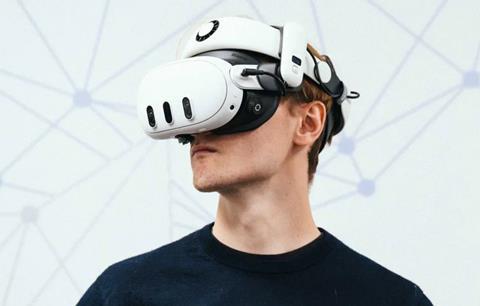
Lufthansa Aviation Training co-operated with Airbus to develop the virtual procedure trainer software over the space of two years, with Brussels Airlines acting as the initial customer.
This software provides a “more flexible, more efficient, and sustainable” training ecosystem, says project manager Pia Born.
Brussels Airlines chief theoretical knowledge instructor Capt Gauthier Lesceu says it offers a “significantly more realistic and intense” training experience.
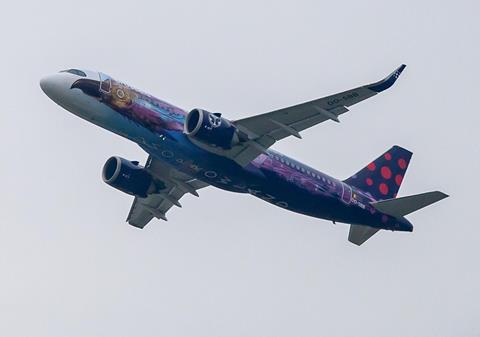
“Our pilots can autodidactically practice procedures early and repeatedly, build muscle memory, and gain situational confidence – an ideal preparation for the simulator phase with increased effectiveness and reduced infrastructure requirements,” adds Lesceu.
Brussels Airlines says the virtual procedure trainer will be gradually rolled out to all 10 of the Lufthansa Group carriers.
It will initially be used to train crews on standard operating procedures. But its capabilities will be expanded to enable training on abnormal situations.
Lufthansa Aviation Training adds that the system will also be broadened to cover other Airbus types within the group, including the widebody A350 and A330.
This virtual-reality capability offers the potential for third-party training, and the company says it will look to develop a version for the external market.