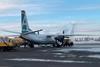













Russian air transport regulator Rosaviatsia has grounded the Siberian carrier Angara Airlines, three months after a fatal accident involving one of its Antonov An-24s.

Angara had already been subject to unscheduled checks in the aftermath of the crash and, as a consequence, prohibited from undertaking certain activities including maintenance and training.

But Rosaviatsia says it has revoked Angara’s commercial air transport operating certificate, grounding the carrier from 5 November.

“This carrier will be unable to operate commercial flights,” says the regulator.

It took the decision “to ensure flight safety” following the conclusions drawn during inspections by the Siberian division of transport supervisory authority Rostransnadzor.

Angara aircraft-c-Angara Airlines

Source: Angara Airlines

Angara has been operating for 25 years since its founding in 2000

While the investigation into the 24 July crash is still progressing, preliminary indications point to an altimeter pressure-reference setting error as the aircraft was descending towards Tynda airport in the Amur region.

Angara has been operating a network of 11 regional routes using An-24s and An-26s. These include five connections from Irkutsk and three from Khabarovsk.

“Other carriers will carry passengers on these routes,” says Rosaviatsia, pointing out that IrAero already operates services on four of the Irkutsk routes. IrAero will pick up other services within Transbaikal and Buryatia.

Aurora Group will operate the routes from Khabarovsk.

Rosaviatsia says Angara has closed bookings for all flights after 1 November, and is offering affected passengers a refund or rebooking on IrAero, Aurora, or Khabarovsk Airlines services.

Based in Irkutsk, Angara had been commemorating 25 years of operations since its founding in 2000.

The carrier is part of Eastland Group, which also has interests in shipping, tourism, hotels, motor transport and services.

It expanded through a merger with IrkutskAvia in 2010 and was formerly an operator of Antonov An-148 twinjets. But its fleet currently centres on An-24s and An-26s, as well as Mil Mi-8 helicopters with which it conducts specialised operations such as forest fire suppression, medical evacuation, and aerial photography.