















The head of India’s air force sees a clear need for new combat assets but offers few hints about the direction that this might take.
In a recent briefing with journalists, Indian air force Air Chief Marshal AP Singh discussed a range of programmes, including indigenous efforts as well as the potential to obtain more aircraft overseas.

Singh made the remarks amid an increasingly tense geopolitical environment following a short conflict with rival Pakistan in May.
He did not touch on Indian air force losses, which are understood to have been five aircraft, but says that the air force was very successful at destroying Pakistani aircraft on the ground and was able to significantly limit its rival’s options. Moreover, he says that an Indian long-range surface-to-air missile – likely the Russian produced S-400 – was able to hit an enemy aircraft at a range of 161nm (300km).
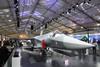
The conflict gave urgency to India’s fighter acquisition plans, particularly around fifth-generation jets. China has already inducted two stealth fighters, the Chengdu J-20 and Shenyang J-35A. Beijing has also offered the J-35A to Islamabad.
Singh expresses optimism that the country’s fifth-generation Advanced Medium Combat Aircraft (AMCA) can stick to programme timelines given that Indian industry gained valuable experience with the perennially delayed Hindustan Aeronautics (HAL) Tejas Light Combat Aircraft.
Current plans call for a first flight around 2028, with the type to be inducted by 2035.
“It’s a tough task if you look at the way the Tejas Mk1 has gone, but at the same time they now have a lot of experience behind them. Also, we have a new model, where the private industry is being allowed in this programme,” he says.
“So, I personally feel this timeline can be achieved or maybe even bettered if people really want to do it.”
He is also optimistic that the Tejas Mk1A, which features significant improvements over the original Tejas Mk1, will arrive this year. There is still some work to be done with the programme, but once the aircraft is certificated the air force is looking forward to operating it.
Singh was coy when pressed about whether India is looking at the Sukhoi Su-57, stating that India’s air force and government have specific processes that need to be followed for new equipment.
“Whatever decision is collectively taken will be best for the Indian defence forces,” he says.
On India’s long running but vague Multi-Role Fighter Aircraft (MRFA) requirement for 114 new fourth-generation fighters, Singh confirms that the Dassault Aviation Rafale is one option given that the type had won the Medium Multi-Role Combat Aircraft competition, although this was ultimately overturned in 2015. New Delhi subsequently ordered 36 Rafales off the shelf.
“Any aircraft of that class is what is required immediately,” says Singh.
“Whether it is Rafale or something else really doesn’t matter, but yes Rafale is easy to absorb. Whichever [aircraft manufacturer] is ready to come with a proposal to make in India and to give us technology I think that design should be chosen.”

Singh offers no timeline as to when – or if – the MRFA deal will be concluded.
In addition to the Rafale, MRFA contenders include the Boeing F-15EX, Eurofighter Typhoon, Lockheed F-21 (a rebadged F-16V), and Saab Gripen E/F.
Singh also touches on a major upgrade programme for Su-30MKI, a type that forms the backbone of India’s fleet. The work will see the jets receive modernised avionics, sensors, and an improved electronic warfare capability.
He says the project is progressing well, with a focus on how new systems will be integrated with the existing Su-30MKI fleet. Given the complexity of the work Russian help will be required.
India has 265 Su-30MKIs in its inventory, and plans call for 84 examples to be upgraded. Singh, however, suggests that up to 70-75% of the fleet could end up being updated.
“Generally, when you have programmes like this you cater for 70-75% of the fleet, because by the time you have reached the last of the upgraded some of the aircraft would have reached the end end of their life,” says Singh.