
















Amid the ongoing US-Israeli air campaign against Iran, US Air Force bombers have been spotted at RAF Fairford in the UK, loading up with munitions.
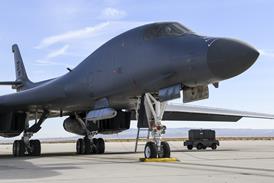
Video posted to social media on 11 March shows at least two Boeing B-1B supersonic bombers staged on the ramp at the Gloucestershire air base that hosts US military personnel.
The footage was first posted by UK journalist Richard Gaisford, working in a freelance capacity for Al Jazeera’s English-language service.
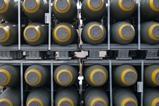
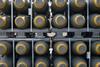
Camouflage-clad ammunition handlers can be seen staging rows of large gravity bombs outside the jet-powered bombers. The weapons appear to be GBU-31 900kg (2,000lb) Joint Direct Attack Munitions (JDAMs) – their characteristic olive-green casing and light grey guidance fins plainly visible.
A smaller number of AGM-158 long-range Joint Air-to-Surface Standoff Missiles (JASSMs) appear to be on loading pallets in another video.
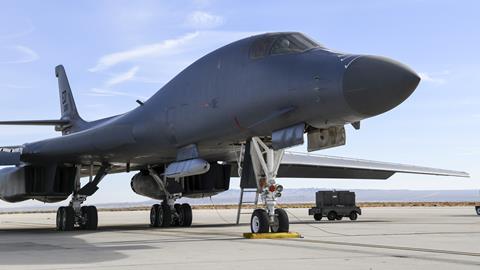
Handlers can be seen removing a rotary launching mechanism from one of the B-1B’s bomb bays. The cylindrical devices have circularly arranged hard points that allow for more-efficient carriage of munitions stores, including bombs and cruise missiles.
Each aircraft carries three rotary launchers – one in each bomb bay.
B-1Bs can carry 34,000kg of ordnance internally, according to the USAF, equivalent to 24 900kg GBU-31 JDAMs or 24 JASSMs.
In 2020, the service began testing the concept of equipping B-1Bs with weapons carried externally from six pylons; that capability had been removed from B-1Bs for years under a Cold War-era nuclear arms limitation treaty.
More recent 2024 tests on the so-called Load Adaptable Modular system further demonstrated the B-1B’s ability to carry large munitions externally.
Separate images released by US Central Command at the start of the current Iran operation show Boeing B-52H heavy bombers taking off with six JASSM missiles each, carried on underwing pylons.
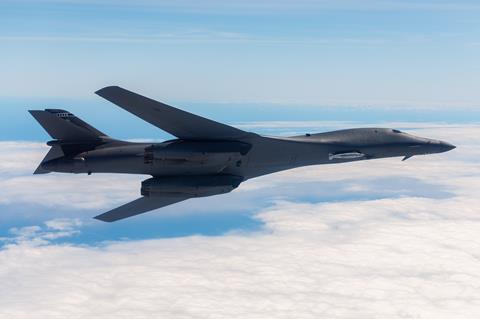
All three US Air Force bomber types, including B-1B, are involved in the Iran air campaign. A number of B-1Bs and Boeing B-52Hs have been operating from RAF Fairford since early March, with the approval of UK Prime Minister Keir Starmer.
The USAF describes Fairford as “the preferred bomber forward operating location in Europe” for the service’s Global Strike Command. The base features ”one of the longest flightlines in the UK and supports a variety of missions and exercises”, the air force says.
The observed loading of JDAMs aligns with statements from defence officials in Washington that the air campaign has shifted from relying on expensive and less plentiful long-range missiles like the JASSM to relatively cheap and plentiful gravity bombs like GBU-31s and smaller 227kg GBU-38s.
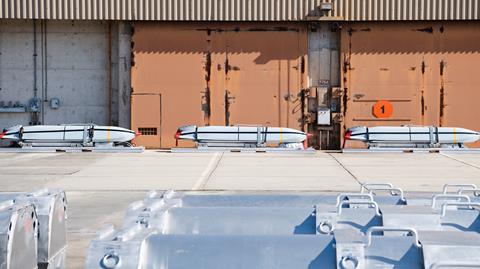
The Pentagon is believed to have tens-of-thousands of such weapons available, including both GPS- and laser-guided variants. Thousands of the underlying “dumb” bombs and bolt-on JDAM guidance kits can be churned out per year.
By contrast, more-advanced powered missiles like JASSMs and Joint Standoff Weapons are only produced in the hundreds annually, with much smaller existing stockpiles.