










A think tank associated with the US Air Force (USAF) warns against allowing the Chinese military to operate from mainland sanctuaries in a conflict, as it advocates a greatly expanded force of fighters and bombers.

According to the Mitchell Institute of Aerospace Studies, the USAF’s bomber fleet has fallen precipitously since the Cold War and now comes to some 47 mission-capable aircraft.

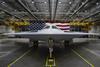
B-21 Raider

Source: US Air Force

Mitchell Institute sees the B-21 as key for denying China sanctuaries in a conflict

“The USAF’s bomber inventory is now a raid force, not a campaign force [and] lacks the sortie capacity and survivability to deny sanctuary to the [People’s Liberation Army/PLA],” says the institute in a presentation associated with a new report, Maintaining the Air Force’s Capacity to Deny Enemy Sanctuaries.

It observes that the US military has struggled in conflicts where US leadership has allowed the enemy to operate from sanctuaries, namely the Korean and Vietnam Wars. During both conflicts the application of airpower was greatly limited.

The Mitchell Institute also puts forward the view that the war of attrition in Ukraine stems from the inability of either Kyiv or Moscow to attain air superiority.

Moreover, should China attempt to invade Taiwan, it is not enough to prevent the PLA from securing a lodgement on the island’s shores. US forces, it believes, will need to strike PLA “centres of gravity” on the mainland, such as China’s military leadership, command and control, and long-range combat capabilities.

In a conflict China will attempt to deny bases in the so-called First Island Chain on China’s periphery, forcing US and allied forces to operate at a distance. US forces’ reliance on stand-off weapons will also reduce the frequency and density of US strikes.

“The long-range kill chains needed to conduct stand-off strikes can also increase the cost to achieve desired effects on targets – greater cost per effect – since advanced long-range missiles are typically more expensive than the shorter-range munitions that can be delivered by stealthy aircraft on targets in contested areas,” says the report.

While the institute acknowledges the future importance of collaborative combat aircraft, it makes a case that the USAF requires an increase in advanced manned aircraft well beyond existing plans.

Among several other recommendations, it calls for the USAF to obtain “at least” 200 Northrop Grumman B-21 bombers, double current plans for 100 examples, and 300 Boeing F-47s, beyond existing plans for 185. It also calls for obtaining 74 Lockheed Martin F-35As and 25 Boeing F-15EXs annually.

“The air force now has a once-in-a-generation opportunity to rebuild the sanctuary denial capability and capacity that the US military and its allies depend upon,” says the report.

“But the air force must receive the resources required to do so.”