















US think tank Rand has called on the US Air Force (USAF) to expand cross-servicing arrangements with European allies in support of the Agile Combat Employment (ACE) strategy.

ACE envisions US and allied aircraft operating from dispersed bases to complicate enemy targeting. Rand, in a recent report focused on the Lockheed Martin F-16 and F-35, argues that greater interoperability at the maintenance level is essential to making ACE viable. The study warns that ACE places significant strain on USAF personnel, making reliance on allied maintainers more efficient in certain scenarios.

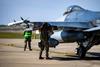
USAF F-16

Source: US Air Force

The range of F-16 variants among European air forces complicates cross-servicing

Progress has been made with the F-35. A 2023 policy change cleared the way for unsupervised cross-servicing by UK personnel, while Norway has also demonstrated maintenance on US aircraft. Yet hurdles remain in weapons loading and inspections, which require technical modifications and closer alignment of procedures.

The report stresses that the F-16, NATO’s most widely operated fighter, presents a different challenge due to the diversity of variants in European service. Fleets range from early Block 10/15 aircraft to more advanced Block 30/50/52 jets and the latest Block 70.

While Belgium, Denmark and Romania will retire their F-16s in favour of the F-35, Greece and Poland will continue to operate both types. Bulgaria and Slovakia have field the Block 70-standard F-16 but are not F-35 customers, while Turkey flies 243 F-16s across multiple blocks.

This patchwork complicates training, technical data sharing, and servicing equipment. Rand cites oxygen systems as an example: nations with newer F-16s equipped with onboard oxygen generation cannot support older aircraft reliant on liquid oxygen, and vice versa.

The study also highlights uncertainty in using partner support equipment, constrained by strict technical orders and inconsistent practices. Rand concludes that the USAF must define partner maintenance capacities, incorporate them into bilateral planning, and rehearse procedures through joint exercises to achieve “day-zero interoperability” in the event of a war. 

“Neglecting to test partner nation support equipment now could leave [a USAF] flying unit less prepared to respond on day zero,” says Rand.