












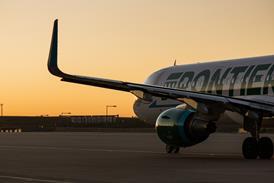


In many ways, asking whether Airbus or Boeing “won” 2025 is an overly simplistic question.
A 12-month snapshot is too brief a timeframe to provide a meaningful insight and does not account for the wider and longer-term context – political, industrial or financial – in which it is recorded.
For instance, in 2025 Airbus pulled in a nice round 1,000 gross orders, against Boeing’s impressive 1,175-aircraft total. On that basis, Boeing edged out its great rival for the first time in several years.
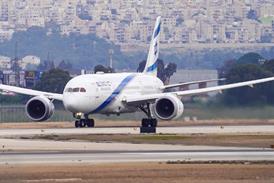
Its advantage was particularly seen on the widebody side, where it banked 574 orders – including 381 for the 787 alone – versus 295 for Airbus.
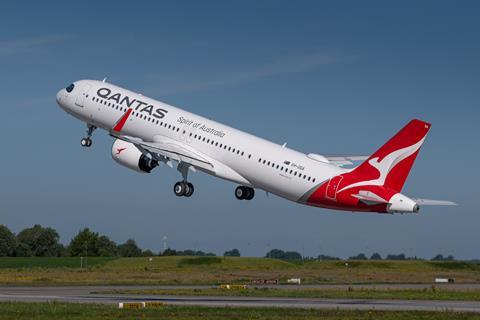
But even discounting the 49-unit contribution from the A220 programme, the Toulouse airframer still outsold its Seattle rival in the single-aisle segment – 656 played 601. And that was despite an A320-family backlog stretching into the 2030s and a consequent impact on near-term slot availability.
So is Boeing still the “winner”? On balance, yes, but does that make up for its protracted period of under-performance? That remains to be seen.
It should be noted that Boeing also benefited last year from the ‘Trump effect’, where big aircraft orders – such as Qatar Airways’ commitment for up to 210 widebodies – were tied to wider trade deals. Can this be sustained in the longer term? Again, a great unknown.
On the delivery side, Airbus could claim victory of sorts, having outstripped its rival by 793 to 600. But in a year marred by the unwelcome return of “gliders” – otherwise completed A320/321s lacking their engines – and a malfunctioning supply chain, the airframer stumbled rather than raced across the finish line, barely beating its revised 790-unit target.
For Boeing, meanwhile, focussed as it was on repairing its wayward production system, comfortably eclipsing its 2024 total of 348 deliveries was a win, albeit only in the longer-term context.
Particularly welcome was an almost 70% rise in 737 Max shipments, to 447 examples, versus its performance a year earlier. That also included clearing a once-large inventory of jets left undelivered after the type’s previous grounding.
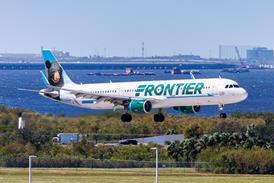
But that figure was outshone by Airbus turning over 607 A320neo-family single-aisles, almost two-thirds of which were in its top-selling A321neo guise.
A bigger victory, however, was the A320 family overtaking the 737 in total lifetime sales, a milestone which occurred during September after almost four decades of rivalry. Airbus had already opened up a 100-unit-plus lead by the end of December.
That achievement will have been a bigger cause for celebration in Toulouse last year than just out-delivering its production-capped rival – the Max – again.
If Boeing’s recent performance improvement is not sustained, then the A320 family – which is on a heading towards achieving an output of 75 aircraft per month – will continue pulling further ahead of the 737.