















Pilots of an Airbus Helicopters H160 that ditched off the coast of Brazil on 2 January opted for the emergency landing after detecting “significant vibrations in flight”, the manufacturer has disclosed.

On the back of the incident, the European Union Aviation Safety Agency (EASA) has also issued an emergency airworthiness directive (EAD), related to main rotor components.

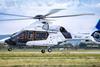
omni-taxi-aereo-first-h160-c-OHI

Source: Omni Helicopters International

H160 was delivered on lease to Omni Taxi Aero in 2024

Updating H160 operators in a safety information notice issued on 8 January, Airbus Helicopters says initial examination of the aircraft by Brazilian investigation authority CENIPA revealed damage “on the main rotor and on the tail rotor drive line”.

This includes a rupture to a main rotor blade pitch rod. “Preliminary observation of the fracture surface seems to indicate fatigue,” the notice states. “Further and deeper laboratory analysis are in progress.”

A lead lag damper on the same blade was also found disbonded, it adds.

Airbus Helicopters says “the cause of the event is not determined” and stresses that the official investigation is ongoing.

However, EASA’s EAD, released on 8 January, offers further detail, mandating “replacement of the upper and lower pitch rod end bearings on the pitch rods of the main rotor”.

Operators of H160s with affected parts must replace those components before they reach 165 flight hours, the EAD specifies.

Airbus Helicopters states that “no evidence of any maintenance misconduct has been observed in the current stage of the investigation”.

Nonetheless, it has reminded operators of specific maintenance tasks related to pitch rods, lead lag dampers, tail driveshafts and dampers, and main rotor track and balance.

The incident took place at around 11:00 local time about 20min into the flight from Cabo Frio airport to a Petrobras offshore platform.

All eight occupants in the Omni Taxi Aereo-operated H160 (PR-OFB) – two crew and six passengers – were safely rescued by the Brazilian navy.

Following the ditching, the helicopter was recovered and the cockpit-voice and flight-data recorders secured; data from the devices is currently being downloaded, the airframer says.

It marks the first accident involving the medium-twin-class H160, which only entered service in 2022. The incident aircraft is a 2024-built example (MSN50) and was delivered to Omni in November that year.