






The captain of a United Airlines Boeing 737 Max 8 that suffered a collapsed left main landing gear and left the pavement in Houston in March 2024 later told investigators that he had rolled to the end of that runway with minimal braking “hundreds of times”. 

Doing so provided a smoother landing for passengers and minimised ground time, the captain said during an interview with US National Transportation Board (NTSB) investigators. 

The pilots of United flight 2477 from Memphis to Houston were also told by air traffic control (ATC) in Houston to “keep your speed up”, according to a 31 December report from the NTSB’s Operational Factors/Human Performance board. Though it does not identifiy a cause of the accident, the report suggests a multitude of factors – including the captain’s possible misperception of runway surface conditions and a general urgency to clear the runway – may have proven critical.

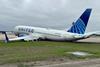
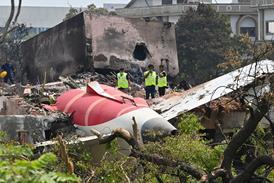
As FlightGlobal reported upon release of the NTSB’s preliminary accident investigation, the captain attempted to expedite time on runway 27 at Houston’s George Bush Intercontinental airport, then attempted to enter the taxiway at a relatively high speed. The aircraft left the pavement and struck a concrete structure, causing separation of the 737’s left main landing gear. 

The narrowbody jet came to rest in a grassy area with its left winglet and engine nacelle resting in the grass. No injuries were reported among the 160 passengers and crew aboard flight 2477 from Memphis to Houston. 

However, the accident came amid a series of high-profile mishaps on United flights in early 2024 that put heightened focus on the Chicago-based carrier’s safety practices. 

United 737 Max 8 off taxiway in Houston

Source: National Transportation Safety Board

The 737 Max 8’s left main landing gear separated from the aircraft after striking a large concrete “manhole” 

On approach to George Bush Intercontinental airport, the United flight crew expected to land on runway 26L. “According to crew interviews, the captain did not perform a threat forward briefing at top of descent (a United Airlines operating procedure), nor did he print landing performance data,” the report says. 

The captain told the first officer that he preferred runway 27L because it cut down on taxi time to gate C40. The first officer’s request to land on runway 27L was granted by ATC as the United 737 descended to 14,000ft. 

The captain told investigators that the flight crew received ATIS (automatic terminal information service) codes from the tower in Houston. He recalled that the braking action code for runway 27 was “3/3/3”, which indicate a slippery runway surface with reduced deceleration from braking. 

The captain selected autobrake setting 2, telling investigators he wanted “more resistance on deceleration”. 

“He recalled that he did not initially change the autobrake setting upon receiving approval to land on runway 27,” the report finds. 

The first officer “could not specifically recall the braking action for runway 27”, nor could he “recall United’s procedure for selecting an autobrake setting with a runway conditions code of 3 or less”, the NTSB says. 

At an altitude of about 2,000ft, the first officer of the United 737 requested to roll to the end of the runway upon landing. Flight 2477 trailed about 5m behind an Embraer ERJ 145, and was roughly 5m ahead of another United 737 landing on runway 27. 

In response, ATC told the pilots to ”keep your speed up”, according to the NTSB report. 

The captain changed the 737’s autobrake setting to 1 from 2. Later, he told investigators that “he preferred a lower braking setting and using the runway length to slow down gradually, rather than decelerating abruptly”. 

Flying in instrument meteorological conditions, the aircraft broke under the clouds at an altitude of about 1,000ft; the captain reported good visibility, with no rain on the cockpit windows. The runway looked dry. 

“He recalled that, during final approach, he saw ’no glares off the runway that would tell me there’s water standing on there, so it was in perfect condition under the clouds, as far as I was concerned,” the NTSB says. 

The first officer, meanwhile, recalled seeing a wet surface on runway 27. 

The captain disconnected autopilot and manually flew the remaining descent and landing, touching down 1,500-2,000ft past the approach end of runway 27. 

With the aircraft’s speed brakes deployed and thrust levers in idle reverse, the captain manually stowed the speed brake lever to disarm the autobrake. 

He told investigators that he had landed in Houston “hudreds of times”, and that, based on his experience, going full reverse-thrust would cause the aircraft to shake and come to an abrupt stop. 

”I started applying gentle brakes so I can roll to the end and since he said expedite, I didn’t slow too much initially because I want to get there, get out his way,” the captain said, referring to the United 737 behind them. 

”My mental status at the time was I got the whole runway to myself. It looks dry.” 

With about 6,000ft of runway remaining, the captain applied manual braking but did not feel an “equivalent sensation of deceleration”. 

The RASS (Runway Awareness and Advisory System) called out 2,000ft of runway remaining, according to the first officer. 

With 1,000ft of runway left, the captain began pressing harder on the brakes but the 737 did not slow down as much as he expected. 

“The captain could not recall the indicated speed as the airplane approached the end of the runway, but he sensed that the airplane was travelling faster than normal,” the NTSB report says. ”He recalled facing a choice between continuing straight ahead into the grass or braking hard and turning right to taxiway SC.” 

The captain chose the latter option, attempting to turn right onto the taxiway at a groundspeed of about 37kts. He felt the fuselage and rudder pedals “shake violently” as he pressed “aggressively” on the toe brakes. After easing off the brakes, he tried again and got the same shuddering response. 

“He felt a ‘release’ of the left main landing gear, heard a thump, and it seemed the left wheel was not providing any more deceleration,” the report  says. “This did not happen on the right side.”

The captain recalled: ”While holding the brakes, I felt like I’m airborne. Literally saying I’m separate from the concrete. I wasn’t. I’m sliding. By the time it came slow deceleration, the concrete ended.”

The left main landing gear an the nosewheel left the runway surface as the aircraft came to rest, its left wing low in the grass. 

The captain recalled being “in shock” but trying to remain calm. The pilots determined that there was no sign of fire and that none of the passengers or flight attendants were injured, so evacuation slides were not deployed. Passengers de-planed using stairs and were taken to the terminal in a bus. 

The captain is a 61-year-old resident of Houston, holding ratings for Boeing 727, 737, 757 and 767 aircraft types. He has flown commercially since 1994, and with United since 1998. With more than 9,600h in the 737, his most recent training on landing performance came in February 2024 – a month before the accident. 

Interviews of several first officers who have flown with the captain reflected positive opinions of his skills and experience, according to the NTSB.

Co-workers also spoke well of the first officer, who had more than 1,250h in the 737 at the time of the accident and was considered a strong candidate to upgrade to captain.