














An air charter company involved with the first full emergency use of Garmin’s Autoland system has revealed more details about the 20 December event, including that the pilots were not incapacitated and chose to allow the system to land the aircraft following loss of cabin pressure.
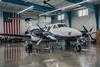
That is according to Buffalo River Aviation, which says pilots of its aircraft – a Beechcraft King Air B200 with registration N479BR – “consciously elected” to allow the system to retain control of the aircraft for the duration of the flight. It cites challenging flight conditions as reasons the pilots let Garmin’s system do the flying.
A company called Gunner Aviation owns the King Air, but the aircraft is operated for Buffalo River, according to Cirium fleets data and FAA records.
Garmin’s Autoland system, available on numerous small aircraft, is designed to operate in instances when pilots become incapacitated and “can no longer perform their duties”, the avionics manufacturer has said.

Autoland can be activated by pushing a button in the cockpit. It can also engage automatically, as happened during the 20 December flight, according to Buffalo River.
After taking off from Aspen (Colorado) and ascending through 23,000ft, the King Air “experienced a rapid, uncommanded loss of pressurisation”, prompting the two pilots – the only people aboard – to don oxygen masks.
The Garmin Emergency Descent Mode and Autoland systems then “automatically engaged, exactly as designed when the cabin altitude exceeded the prescribed safe levels”, says Buffalo River.
“Reports of pilot incapacitation are incorrect and result solely from the Garmin emergency system’s automated communication and reporting functions,” it adds.
Instead of taking control back from the system, the pilots allowed the Autoland function to remain active and to fly and land the aircraft at Rocky Mountain Metropolitan airport near Denver at about 14:20 local time.
“Due to the complexity of the specific situation – including instrument meteorological conditions, mountainous terrain, active icing conditions, unknown reasons for loss of pressure and the binary (all-or-nothing) function of the Garmin emergency systems – the pilots, exercising conservative judgement… made the decision to leave the system engaged while monitoring its performance,” Buffalo says.
The pilots were prepared to take over if required, but the system worked “exactly as expected”, it adds.
The FAA is investigating. It provides few details other than to say the “pilot lost communication with air traffic control”.
“This was the first use of Autoland from start-to-finish in an actual emergency,” Garmin says, adding that 1,700 aircraft are flying with Autoland.
Types approved for the system include King Air 200s, 300s, 350, Piper M600s, Cessna Citations, Cirrus Vision Jets, Daher TBMs and Honda Aircraft HA-420 HondaJets.
Autoland has also fitted on Beechcraft’s single-turboprop Denali, which that manufacturer aims to have certificated in 2026.