















Flight frequencies at Newark Liberty International airport will be capped at 72 hourly through October 2026 under a final order from the Federal Aviation Administration. 

United Airlines, which maintains at massive hub at the New Jersey airport, said on 25 September that the finalised capacity reductions, along with air traffic control (ATC) technology upgrades, represent “major milestones” as the airport rebounds from major operational difficulties earlier this year. 

The FAA had previously reduced flights at Newark to 68 from 80 hourly in response to several high-profile ATC technology outages and consistent operational disruptions at the airport. 

Flights were maintained at that reduced rate through peak summer flying at Newark.

United recently said Newark’s operations during the warmest-weather months compared favourably to the operations of John F Kennedy International and LaGuardia airports. 

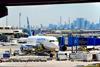
shutterstock_2624227005

Source: George Wirt / Shutterstock

United is seeking to entrench an already-dominant position at Newark 

United chief executive Scott Kirby thanked US transportation secretary Sean Duffy and FAA administrator Bryan Bedford for finalising the capacity cap at 72 flights hourly – 36 arrivals and 36 departures. 

”Newark is running better than ever and operating at a level on par with the other major New York-area airports,” Kirby says. 

”Now that airline schedules match the actual capacity at EWR, things will only get better as we head into the fall and winter seasons and we look forward to continuing to work with [the Department of Transportation] and FAA on a long-term solution to manage the airport’s capacity,” he says. 

United had long advocated for tighter capacity restrictions at Newark, a dynamic likely favouring itself as it holds a dominant share of take-off and landing slots available there. 

United said in July that disruptions at Newark cost it $218 million during the second quarter, but booking volumes for Newark flights have since “normalised”. 

Difficulties at Newark took centre stage earlier this year, when repeated ATC equipment failures raised calls to address the USA’s ageing aviation-safety technology. 

US President Donald Trump’s administration and Bedford, the new FAA administrator, have made a nationwide ATC technology overhaul a high priority.

Trump’s “One Big Beautiful Bill” allocates $12.5 billion from the US government’s fiscal year 2025 budget for “acquisition, construction, sustainment and improvement of facilities and equipment necessary to improve or maintain aviation safety”.

Secretary Duffy has previously said the DOT will seek a total of more than $30 billion for the upgrades. 

Meanwhile, the FAA says it is on track to hire 2,200 new ATC workers this year amid an effort to “supercharge” training and hiring amid an ongoing shortage of qualified controllers.