












The Pentagon has revealed additional details about its new one-way attack drone that is seeing combat service for the first time as part of the war against Iran.
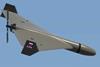
Known as the Low-cost Unmanned Combat Attack System (LUCAS), the US vehicle is derived from the Iranian Shahed-136 one-way attack drone, which has seen heavy combat use in Ukraine, the Red Sea and now the Persian Gulf theatre.
In December, the Pentagon revealed both the fielding of its Shahed derivative and the creation of the US military’s first one-way attack squadron to operate LUCAS drones.
The US undersecretary of defense for research and engineering’s office on 2 March said the LUCAS design has flight range of 434nm (804km) and that they cost $10,000 to $55,000.
That price is less than the Pentagon is paying for Joint Direct Attack Munition guidance kits that convert “dumb” gravity bombs into precision munitions. JDAMs have been touted by the Trump Administration for their low cost and “unlimited” supply.
However, the 434nm range of LUCAS is orders of magnitude beyond that offered by JDAMs – listed as 13nm by the US Air Force.
That short range means JDAMs must be fired by fighters, bombers or large UAVs like the General Atomics MQ-9A – putting crews and expensive aircraft at risk.
By contrast, LUCAS can be fired from far outside enemy weapon-engagement zones.
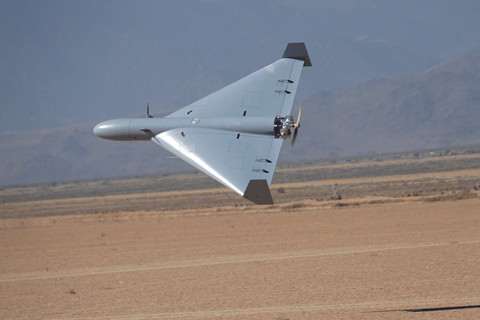
Made by Arizona-based drone manufacturer SpektreWorks, LUCAS was reportedly reverse-engineered from a Shahed-136 recovered by Ukrainian forces.
In August 2025, the US Air Force posted a solicitation seeking a Group 3-category UAS ”representative of the Shahed-136”, including in physical profile, performance and payload.
SpektreWorks markets its Shahed lookalike as low-cost target drone or “threat emulator”, using the trade name FLM 136. The aircraft has 350nm of range and an operating ceiling above 10,000ft, cruising speed of 55kt (101km/h) and endurance of 6h.
Video published by the US military and SpektreWorks indicates the LUCAS/FLM 136 is launched using either a pneumatic catapult or rocket booster and rail system. The drone is capable of fully autonomous take-off and landing.
Russia has made heavy use of Shahed-class drones, originally using systems transferred from Iran but now domestically producing a Russian variant known as the Geran.
A factory in the Russian city of Yelabuga is churning out as many as 5,500 Geran-series drones monthly.
The simple design, small size and low production cost of the one-way-attack concept has upended traditional approaches to air defence and long-range strike.
Massed waves of these “kamikaze drones” can overwhelm or exhaust conventional missile-based air defences, while offering significantly greater magazine depth than traditional long-range munitions.
Each PAC-3 missile fired by the Patriot air defence system costs $4-7 million, depending on the customer, with only 600 missiles per year currently being delivered.
Those numbers are not sustainable against swarms of cheap Shaheds, so conventional militaries and defence manufacturers are experimenting with a number of low-cost counter-UAS options.
These include drone interceptors like Raytheon’s Coyote and Anduril’s Roadrunner, and low-cost laser-guided rockets like the BAE Systems APKWS II, which the US has incorporated into both fixed-wing fighters and attack helicopters.

In Ukraine, Kyiv’s armed forces are using rotary-wing aircraft and crew-served machine guns to take down Geran attack drones.
Ukrainian manufacturers have also developed small quadcopter interceptors that can be remotely piloted to take out incoming threats. A number of models are in production and being deployed to frontlines.
After years of bombardment from Russian Geran/Shahed drones, the Ukrainian armed forces are now considered to be leading experts on counter-UAS theory and tactics.
Governments in Europe, the Middle East and the US have sought advice from Kyiv on how best to address the threat, particularly with Iran launching drone attacks throughout the Persian Gulf and wider region.
President Volodymyr Zelensky has suggested exchanging Ukrainian counter drone technology and know-how for the more-advanced air defence systems produced in the US.