







The US military is seeking a small uncrewed aircraft that replicates characteristics of an Iranian-made kamikaze drone that has seen heavy use in Ukraine.

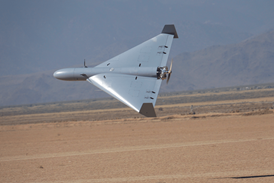
The effort is not meant to field a similar weapon for allied use, but rather to support development of cost-effective solutions for defending against swarmed aerial threats like the HESA Shahed-136 one-way uncrewed aerial system (UAS) that Iran has provided in large numbers to Russia.

A request for information (RFI) posted by the US Air Force on 20 August asks industry to submit potential options for a Group 3 UAS with similar capabilities and characteristics to the Shahed-136, for use as a target drone.

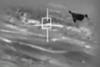
IAF gun camera footage of Iranian Shahed drone

Source: Israeli Defense Force

Iran’s HESA Shahed-136 has emerged as a weapon of choice for regimes seeking cheap long-range weapons

Group 3 refers to UAS weighing 25-598kg (55-1,320lb), generally operating below 18,000ft and at speeds less than 250kt (463km/h).

Documents included with the RFI indicate the Pentagon intends to purchase at least 16 of the aircraft to support development on an unspecified counter-UAS weapons programme.

“This acquisition aims to leverage drones representative of the Shahed-136 which is currently used by adversarial countries and is being encountered in multiple areas of operation,” the solicitation states.

Shahed drone photo by Conflict Armament Research

Source: Conflict Armament Research

Russia has bombarded Ukrainian cities with Shahed one-way UAS, unofficially known as suicide drones or kamikaze drones

Shahed-family drones have been deployed en masse by Russia, which fires the long-range weapons into Ukrainian cities in waves featuring dozens of the UAS in single attacks.

Moscow now produces the Shahed-136 under license from Iran, using the local designation Geran-2.

Tehran has also deployed the low-cost weapons directly in strikes against Israel, including an attack in April 2024 that featured roughly 150 Shaheds, according to the Pentagon.

Each Shahed has range of 1,350nm (2,500km), according to the Pentagon, with maximum airspeed of 100kt. The craft are relatively small, with a 2.5m wingspan and weighing around 200kg.

Such munitions pose unique challenges for Western air defence systems, which are tailored toward countering fast-moving, high-altitude threats – and fewer of them simultaneously.

By contrast, the simplicity and low production cost of Shahed-136s allow large numbers of the vehicles to be fired at once, potentially overwhelming air defences. Those defensive networks also rely on expensive, high-performance surface-to-air missiles, creating a significant cost imbalance between defenders and attackers.

This has led planners in Washington, Europe and Kyiv to seek lower cost options for shooting down one-way UAS like the Shahed, such as fighters equipped with small guided rockets, truck- and ship-mounted rocket systems, directed energy systems and even modern versions of 20th Century-style anti-aircraft guns.

But those weapons need targets for testing. Hence the latest RFI.

The solicitation says proposals must be one-to-one scale, reversed-engineered copies of the Shahed-136, with the same form, fit and function, including rear-facing propellers and ability to carry 36kg warheads.

Each aircraft must be radio-controlled and capable of autonomous flight, to include take-off and landing, with a support crew of no more than three individuals. The target aircraft must use a fuel engine, rather than an electric drivetrain, to be representative of the Shahed-136.

A minimum range of 80km is stipulated, with no requirement for low-observable, radar-evading features or ability to operate without GPS navigation.

The RFI is open until 10 September.