












A major milestone will happen later this year in the race to field autonomous fighter aircraft capable of operating without direct human control.
Known as Collaborative Combat Aircraft (CCAs), the uncrewed tactical jets are seen as critical to circumventing the high cost and production constraints associated with traditional fighters – which limit the ability of Western air forces to achieve battlefield mass.
The US Air Force (USAF) on 25 February confirmed plans to select a winner in the first increment of CCA development in the coming months.
“We’ll be making that decision by the end of the year,” says Colonel Timothy Helfrich, the air force’s portfolio acquisition executive for fighters and advanced aircraft.
Helfrich spoke at the 2026 Air & Space Forces Association Warfare Symposium in Denver, Colorado on 25 February.
Notably, the selection will include both the physical aircraft design and the mission autonomy software that will enable the CCA to carry out combat tasks with only limited remote direction from a human manager.
“That will happen this year and then we’ll get moving pretty darn quickly on production,” Helfrich notes.
That is in-line with previous estimates from the air force. The service is currently flight testing two prototype CCA designs, along with two autonomy software options.
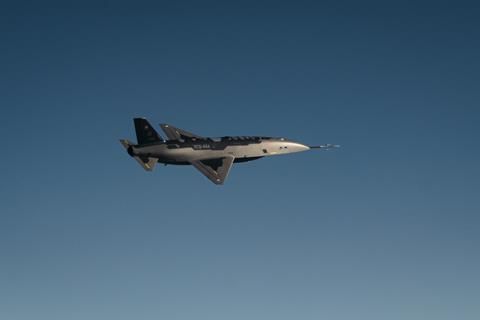
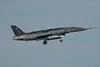
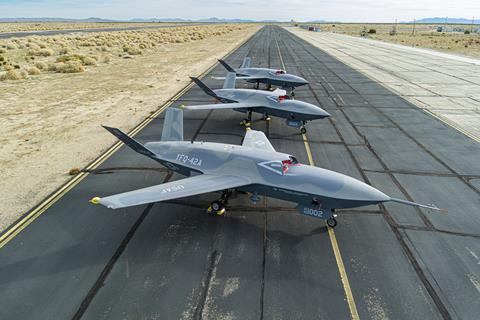
Anduril Industries and General Atomics Aeronautical Systems began flight testing last year with their developmental jets – the YFA-44A and YFQ-42A, respectively.
This month, that campaign expanded to include the first weapons integration flights and the inaugural sorties featuring the two contenders for autonomous mission software.
Although that portion of the CCA programme has been shrouded in secrecy, the air force has now confirmed that start-up Shield AI and RTX subsidiary Collins Aerospace are the two finalists to provide the artificial intelligence brains that will carry out missions assigned to the uncrewed fighters.
Initially, that will be limited to air-to-air weapons employment and communicating with crewed aircraft, to include receiving tasking instructions from human pilots flying their own aircraft and sending back sensor data. However, the scope of CCA use is expected to expand with subsequent generations of aircraft.
Separate software packages are responsible for physically flying the aircraft without direct flight control input from a human pilot or controller.
The air force assigned Shield AI to test its Hivemind mission autonomy system on Anduril’s YFQ-44A, while Collins Aerospace’s Sidekick software package was paired with General Atomics and the YFQ-42A.
In effect, the air force is running two parallel competitions, and the winning software will not necessarily be the one that was tested on the winning aircraft.
Both Collins and Shield AI tell FlightGlobal that the their autonomy software can function with either CCA design, per the Pentagon’s Autonomy Government Reference Architecture framework.
That so-called “open system” approach sets up a universal standard for autonomy and allows software and algorithms from multiple vendors to be quickly rolled-out and updated, regardless of the specific hardware.
In practise, this will allow operators to introduce new tactics and capabilities much faster than the traditional procurement approach where the prime contractor controls all the elements of a weapon system.
The air force confirms that Shield AI’s Hivemind completed its first flight on the YFQ-44A on 24 February, while Collins tells FlightGlobal that Sidekick logged its maiden sortie on the YFQ-42A earlier on 12 February.
“Hivemind successfully completed all test points required to demonstrate full integration and mission autonomy aboard the aircraft, including handling mid-mission updates and initial operational behaviours,” Shield AI says of the 24 February flight.
Anduril has also begun weapons integration flights with the YFQ-44A using inert missile bodies, a milestone the air force confirmed on 23 February.
Shield AI’s Hivemind has become an early leader in mission autonomy over the past several years, with deployment aboard more than 15 different platforms and combat service in Ukraine with Shield AI’s own V-Bat uncrewed aerial system.
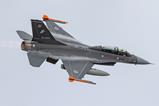
Hivemind also famously controlled the USAF’s Lockheed Martin F-16-based X-62 test aircraft in autonomous dogfighting exercises held in 2023.
Despite that experience, the company is still breaking new ground with the CCA programme, according to its vice-president of solutions, Christian Gutierrez.
“We’re learning a lot,” Gutierrez tells FlightGlobal.
“There’s still a lot that has to be learned, from mission planning, [command and control], and debrief,” he adds. “All things that we’ve been working on at Shield for over 10 years now.”
Shield AI also plans to install Hivemind on the company’s own X-Bat aircraft, an internally developed autonomous jet that is set to log its first flight later this year.
Collins tells FlightGlobal that it has also been quietly developing its Sidekick software for more than 10 years.
Although much of that activity is classified, Collins’ general manager of strategic defence solutions, Ryan Bunge, tells FlightGlobal that Sidekick has flown aboard three to four different systems during that time.
“Right now we’re focusing on some of the [US] Air Force’s early priorities in aviating and navigating, and we’re rapidly pivoting to more tactical applications,” Bunge said during an interview at the Air & Space Forces Association Warfare Symposium in Denver, Colorado.
While the USAF programme is the top priority for Collins’ Sidekick effort, Bunge tells FlightGlobal that the company is maintaining a variant of the autonomy software that could be approved for export to customers overseas, where autonomous fighter programmes are generally less mature.
Regardless of who wins the first round of CCA contracts, software providers and aircraft manufacturers alike are all looking ahead to the second increment of the programme, which is slowly coming into focus.
That round of development is expected to include multiple uncrewed jets of differing sizes and expanded combat capabilities, which will require more powerful AI brains to execute.
Stay tuned for a full report on mission system autonomy software being developed by Collins Aerospace and Shield AI, including full interviews with the heads of both teams and more insight into how AI control systems will continue to shape aviation.