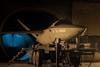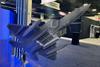














Mitsubishi Heavy Industries (MHI) and Shield AI have completed a series of autonomous flight tests following the rapid integration of autonomy software into a prototype drone.
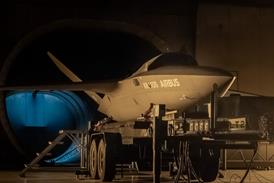
The work saw Shield AI’s Hivemind autonomy software incorporated into MHI’s Affordable Rapid-Prototyping Mitsubishi Drone (ARMD) within less than two months, say the companies.
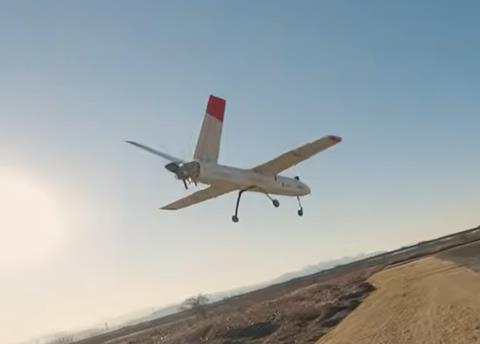
According to MHI, the integration of new autonomy software into a drone would have previously taken far more time and effort.
“In previous development efforts, MHI built and maintained an environment that leveraged multiple open-source products to perform in-house coding, AI training, simulation evaluation, and hardware-in-the-loop testing, which required significant effort,” says the company.
“In contrast, by leveraging Hivemind Enterprise for this project, greater focus could be placed on developing mission autonomy.”
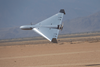
The work resulted in two flight tests in Japan. These saw two separate 20kg (44lb) test vehicles – ARMD-01 and ARMD-02 – demonstrate learning, training behaviours, and “coordinated motions” as they tracked a virtual air vehicle.
During the second ARMD flight, the drone performed more aggressive manoeuvres based on learnings from the earlier flight.
MHI says that mission autonomy work started in September 2025, with the two flight tests happening in November and December.
The company has conducted extensive work on autonomous flight and collaborative combat aircraft (CCAs), including the development of an AI pilot system.
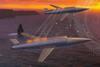
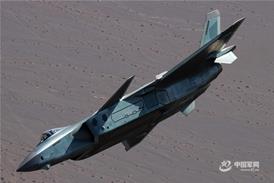
At the Japan Aerospace show in 2024, the company showed two CCA concepts. A video rendering of one of its CCAs showed it shooting down a Chinese Chengdu J-20.
MHI is also the main Japanese industrial partner in the tri-nation Global Combat Air Programme (GCAP), teaming with Italy’s Leonardo and the UK’s BAE Systems.
A sixth-generation GCAP fighter is envisaged as operating alongside lower cost “attritable” CCAs that can provide additional sensing and weapons capabilities, while also taking on more high-risk scenarios.