









Brazilian carrier Azul has emerged from a nine-month financial restructuring under the US Chapter 11 bankruptcy process with a leaner balance sheet and reworked relationships with key lessors and OEMs.
Chief executive John Rodgerson tells FlightGlobal on 23 February that with the exception of Spirit Airlines’ first Chapter 11 filing, Azul completed the process in “record” time.
“I don’t think any airlines have been able to do it as fast as we have,” he says.
Azul filed with US Bankruptcy Court for the Southern District of New York in May 2025 following a series of “macro things outside of our control”, Rodgerson says.
Those forces included lingering effects from the Covid-19 pandemic, local currency devaluation, engine-related aircraft groundings and operational disruptions due to widespread flooding in southern Brazil, including in Porto Alegre.
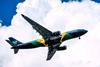
“We had a significant number of groundings related to Rolls Royce on the A330neos,” Rodgerson says. “We had eight engine removals on a fleet of 12 aircraft; that’s significant. And then you take a look at Porto Alegre, where 10% of your network one day to the next is knocked offline.”

None of those factors alone prompted Azul’s bankruptcy filing. Rather, the carrier – which did not show outward signs of acute stress last spring – entered Chapter 11 due to the cumulative weight.
Azul won court approval for its Chapter 11 reorganisation plan on 12 December, clearing it to emerge from the bankruptcy process this year.
The Sao Paulo-based carrier took the last step on 20 February, following repayment of debtor-in-possession financing and settlement of an “emergence offering” of public shares.
Now, it touts $1.1 billion in loan and financing debt reductions and greatly reduced aircraft leasing commitments – thanks largely to reworked deals with its largest lessor, AerCap. Azul says it has shed some $3 billion in liabilities through Chapter 11.
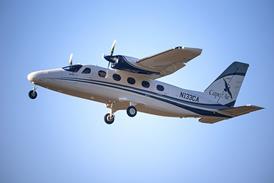
In July, the carrier disclosed it would reject leases on nearly 20 ATR 72-600 turboprops. Azul also unburdened itself of older Embraer 190s, which “we knew were not long-term in our fleet”, Rodgerson says, and it rejected leases on several Airbus A330neos that were grounded due to Rolls Royce engine issues.
Azul has reduced its aircraft rent obligations by roughly one-third.
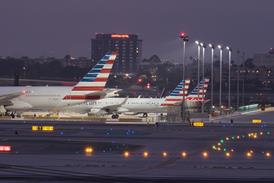
The carrier is moving forward with up to $200 million in financial backing, including $100 million committed each by American Airlines and United Airlines – fierce competitors themselves.
“They both decided to invest in Azul, and they had the opportunity to invest in other airlines… that maybe had better feed in Latin America to them,” Rodgerson says.
He notes Azul is awaiting Brazilian antitrust authorities to approve American’s investment, while United is a longtime partner.
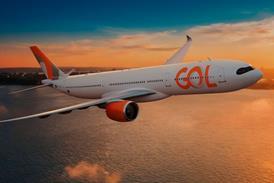
Most major Latin American airlines have undergone financial restructuring in the post-Covid-19 landscape, including Azul’s primary competitors in Brazil – LATAM Airlines Group and Abra Group carrier Gol.
LATAM emerged from the process in November 2022 after filing for bankruptcy at the height of pandemic-related operational disruptions in May 2020.
Gol entered protection in January 2024 and emerged in June last year.
“I think everyone is doing what’s good for them,” Rodgerson says. “It’s a highly competitive market… I think each of us has our own strengths. I bet on the cards in my hand because I feel very strongly about the network we built, the people we have and the leverage on the balance sheet that we’re starting from. It’s an exciting place to be right now.”