














Spirit Airlines’ has received tentative approval from creditors to completed its bankruptcy facilitated restructuring plan, a signal the beleaguered carrier is preparing to emerge from its second Chapter 11 process in “late spring or early summer”.  

The Florida-based ultra-low-cost carrier (ULCC) said on 24 February that it agreed on “the key terms of a restructuring support agreement” with debtor-in-possession lenders and secured note-holders.  

The agreement would provide Spirit with financial backing to exit Chapter 11 and continue operating as a much-reduced business. Its latest bankruptcy process has seen the airline dramatically scale down its operation in a bid to avoid outright collapse. 

Spirit says it anticipates further changes to its “fleet, network and cost structure”, indicating that additional cost-cutting measures are likely imminent. Spirit has already furloughed hundreds of pilots and flight attendants. 

Spirit entered its first bankruptcy process with the US Bankruptcy Court for the Southern District of New York in November 2024 and emerged in March the following year. That reorganisation did not effectively turn around the airline’s fortunes, however, as it continued taking heavy losses in recent quarters. 

The company re-entered bankruptcy protection in August, acknowledging prior changes had not been enough.

Now, with creditor approval in hand, Spirit must secure the court’s approval prior to leaving Chapter 11. 

Airbus

Source: Airbus

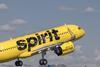
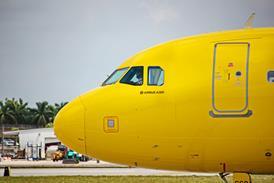
Spirit has moved away from operating A320neo-family jets, which have been plagued by years of Pratt & Whitney engine issues, in favour of older A320s and A321s

Throughout the process, Spirit has steadfastly maintained it will move forward as a standalone business, rebuffing Frontier Airlines’ latest acquisition attempts despite previously acknowledging that a sale, merger or combination was a strong option. 

 “Spirit will emerge as a strong, leaner competitor that is positioned to profitably deliver the value American consumers expect at a price they want to pay,” says chief executive Dave Davis. 

Spirit has bled cash for years, posting losses in 14 of the past 15 quarters, according to Airline Business data. That includes a $317 million loss in the third quarter; it has yet to release fourth-quarter results. 

The ULCC says it will adopt a more-flexible schedule moving forward, tailoring its network to peak times of air travel to minimise unprofitable flying. That model was pioneered by Allegiant Air and has also been employed effectively by Sun Country Airlines.  

Dave Davis, Spirit’s chief executive, previously worked as Sun Country’s chief financial officer. 

Spirit will pursue such a model with a drastically reduced fleet, covering a much-smaller network of domestic and near-international destinations. 

In late September, Spirit revised contract terms with lessor AerCap to reject leases of 27 Airbus A320-family jets. Spirit then shed further metal by rejecting leases of 87 aircraft in October, and rejecting 11 more jets in December. 

The lease rejections amount to more than half of Spirit’s previous fleet, representing one of the most dramatic fleet-reduction efforts in recent memory. 

In a December filing with the US Bankruptcy Court, Spirit chief financial officer Fred Cromer called the aircraft due to be returned “nothing more than a cash drain”. 

“Spirit entered into the leases and related agreements in a different economic climate than the one facing Spirit’s industry today and, unless go-forward terms of the leases can be agreed upon between Spirit and the lessors, such excess equipment is not necessary for Spirit’s revised business plan,” Cromer said. 

Competitor Frontier is undergoing a painful culling of its own. The Denver-based ultra-low-cost carrier said earlier this month it had reached revised contract terms with AerCap, allowing Frontier to return 24 Airbus aircraft to the lessor early. 

Frontier has also reached an agreement with Airbus to defer delivery of 69 A320neo-family aircraft into next decade. 

US low-cost carriers are generally struggling with soft demand for inexpensive seats to leisure destinations, though Allegiant and Sun Country – which plan to combine into one company – have suffered far less acutely than Spirit or Frontier.