
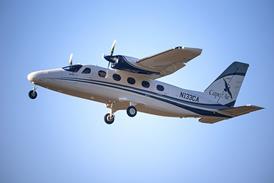
















Kyle Clark, chief executive of US electric aircraft developer Beta Technologies, is a busy man.
The first half of the 2025 was hectic, capped by the debut of Beta’s Alia CX300 in the Paris air show flying display, but the rest of the year ramped from there, culminating in the company’s successful November stock market listing.
Even after hitting that milestone, the rush continued: our mid-December interview was cut short by the need for Clark to dash for a flight to Washington, DC for the unveiling of the Trump administration’s new advanced air mobility strategy. (There was palpable disappointment in Clark’s voice when admitting that time constraints prevented him from flying one of Beta’s own aircraft to the capital.)

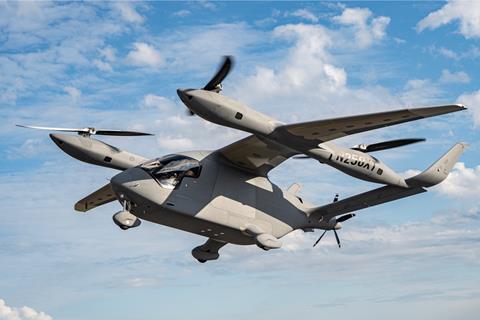
Some of this you might expect – after all, leading corporate transformation and glad-handing politicians are part of a typical CEO’s role – but Clark is busy in ways that are less usual for your average company chief. For instance, one Saturday shortly before our conversation he spent around 12h in the cockpit of Beta’s Alia A250 electric vertical take-off and landing (eVTOL) aircraft, putting another 2h 30min of flight time on the prototype across 12 sorties.
It is also worth pointing out that far from being an idle observer at Le Bourget, Clark was at the controls of the pusher-configured CX300 for several of the display flights.
But however active Clark has been, it has been more than matched by Beta’s test fleet, which in 2025 surpassed 100,000nm (185,200km) of flight – or four times round the globe, as the company likes to point out. (At the time of writing, that figure had risen closer to 108,000nm, as the ticker atop Beta’s website attests.)
“It’s been a totally transformative period of time for Beta and electric aviation, quite frankly,” says Clark. “100,000 [nautical] miles represents a huge amount of flying by the team out in the real world.”
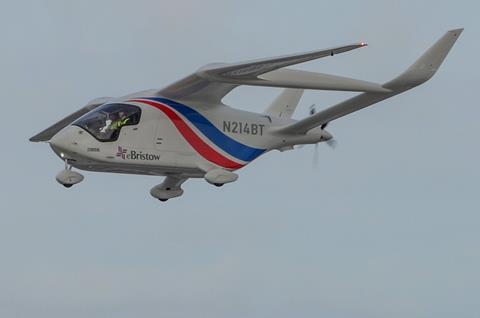
In addition to Beta’s own crews, who made extensive trips across the continental USA and Europe – the latter billed as a “Grand Tour” – pre-production versions of the conventional take-off and landing (CTOL) Alia CX300 are being put through their paces by customers in New Zealand and Norway.
Indeed, CX300 flights account for the vast majority of the 100,000nm total, due to the larger test fleet – four versus a single A250 – and that the CTOL aircraft logs miles much faster than the eVTOL equivalent: “There’s a lot of really slow flying going on when you are developing a vertical take-off and landing aircraft,” Clark points out.
A fifth CX300 is to arrive in early 2026, followed by another A250 in the second quarter, further accelerating the flying programme.
While an impressive milestone on its own, Beta’s target was never to fly four times around the globe – movement for movement’s sake, if you like. Rather, all that flying has been to subject the aircraft to conditions outside a controlled environment, to shake out the bugs, to analyse reliability and, above all, to learn.
At the end of every flight, pilot and maintainer feedback reports are completed, accompanied by analysis of all flight data downloaded from the aircraft.
On any given day, Clark and the engineering team can receive as many as 10 such reports, contained within which is “the candy necessary to improve the flying,” he says.

Two focal points have emerged from the flight campaign: reserves and real-world experience.
“There has been a very consistent voice from the pilots saying, ’We need to make sure we maintain reserves’ – particularly in Europe where flying with 45 minutes of reserves is at the lower end,” he says. “I’m really pleased that we focussed on range and endurance on this aircraft to the point that we can fly comfortably in places where reserves are really, really required.”
Beta and avionics supplier Garmin have also had to work out how to estimate and display remaining battery energy in ways consistent and comprehensible for pilots.
Multiple factors affect performance of batteries, including usage (battery energy capacity decreases with use). As such, a “very sophisticated algorithm has to nail exactly how much energy is left”, says Clark, which is “something that’s really never been done before in aviation”.
Early prototypes presented pilots with multiple parameters for each of Alia’s five battery packs – far too much information to process while coping with all the other demands of flying. “You were looking at a lot of data,” Clark says.
Beta takes the data and “we distil it down”, showing kilowatt-hours remaining across all five batteries as a single number, with the energy consumption displayed alongside. Each battery pack’s charge is also rendered graphically, tapping into the mind’s ability to better interpret shapes rather than numbers.
“If you have got a lot of things going on out there, and you scan your instrument panel, the power being consumed and the energy remaining becomes a picture in your mind as you are scanning.”
Operations in different meteorological and visibility conditions have stress-tested other aspects of the design – water ingress, environmental control systems, even door seals – “and all the other things that reduce the burden on the pilot” but are not necessarily assessed in more tightly regulated test environments.
“A lot of the reports are like, ‘It was really annoying there was a drip of water coming in over my head in the door while I was flying an ILS [approach] into a busy airport,’” says Clark.
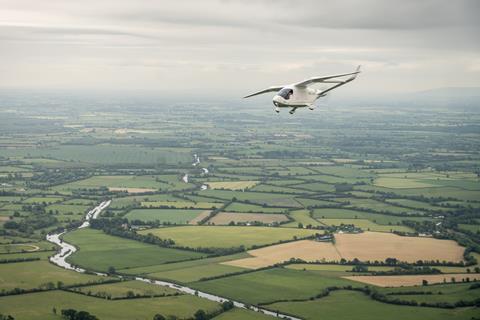
Feedback from external pilots has been enormously positive. Besides characteristics typical to electric propulsion – near-instantaneous power delivery and the relative silence of the motor – pilots have praised dispatch reliability, operation of the fly-by-wire flight-control system and the CX300’s handling qualities, the latter a product of its four ailerons, two elevators and two rudders.
Though the large number of control surfaces provides redundancy – the CX300 will fly fine with half of those inoperative – “embedded within that is a highly controllable airplane, because when everything is working the control authority is really strong”.
Tweaks include better door seals and latches, improved landing gear access panels and changes to the cockpit display symbology for enhanced visibility.
Radio communication range has also been extended – a vital upgrade for operations outside the test environment. During testing, customer Bristow Group encountered electro-magnetic radio interference caused by the electric motor – a problem fixed through better shielding and relocating the radio antenna.
While such changes may seem minor in the greater scheme of things, Clark argues they are critical: “They may sound like tweaks, but they are really expensive to do post-certification, and they are really easy to do right now.”
Certification of the electric propulsion system is anticipated in the first half of 2026, with endurance testing of the motor ongoing. That will be a key milestone along Beta’s overall planned certification path: first, the Hartzell propeller (obtained last year), then the 575hp (430kW) motor, then the CX300 in late 2026, followed by the eVTOL A250 around 12 months later.
And because there is around 80% commonality between the CTOL and eVTOL models – the wing, fuselage, avionics and pusher motor are all the same – the pathway to regulatory approval for the A250 should be simpler, too.
“I believe our strategy is not only winning the certification race but is way more pragmatic and aligned with the expectations of the FAA,” he says. “We will be able to be commercial before other people because of our strategy.”
Although Clark has been an active participant in the ongoing test campaign, other team members – 27 Beta employees are qualified to fly the CX300 or A250 – have racked up far more time at the controls.
Chris Caputo is among them. A former US Air Force pilot, flying the Fairchild Republic A-10 and Lockheed Martin F-16, Caputo also spent time at Delta Air Lines piloting Boeing 757s and 767s.
The latest addition to his CV looks a little different: “I never ever thought in my wildest dreams that I’d be flying in an all-electric airplane kicking off the Paris air show. It was just never in my crosshairs.”
On top of the Parisian exhibition, Caputo was at the sharp end for two of Beta’s long-distance excursions: a six-week 25-state trip across the USA, and the first part of the European Grand Tour in the run-up to the Le Bourget display.
“One of the things that I thought was mind-blowing about this was the fact that, here we are with our serial [aircraft] number two off the production line,” he says. “It’s still an experimental aircraft, and we did this with two pilots, a maintainer and a charge truck driver – it’s a testament to the reliability and the safety of the aircraft.”
Caputo is also full of praise for Beta’s evolving approach to displaying battery energy.
At the start of the programme “it was quite unnerving” to rely on displays showing the state of charge and state of health of the batteries, figures that fluctuated with battery age and altitude. It seemed “it was always lying to you”, he says.
But due to Clark’s insistence that the company’s engineers also fly – seeing “what it’s like to be at the controls… and the importance of accurate and reliable gauging information”, says Caputo – the current system was arrived at.
“It’s very intuitive” for pilots, who are likely accustomed to gallons of fuel per hour and pounds of fuel per hour. “Now, you are just doing it with kilowatts and kilowatts-per-hour – the actual energy that’s on the plane.”
He argues that Beta’s approach offers greater precision than some conventional gauging systems, “where the only time you know exactly how much fuel you have in is [after] you totally top it off and you can visually see the tanks are full”.
“We have got a much more highly engineered energy storage system and gauging system than just liquid in a tank with some sensors,” he adds.
Real-world testing and comparison against flight-planning software have proved the energy guages to be “insanely accurate”.
As anyone who has driven an electric car will attest, planning long-distance journeys requires consideration of charging infrastructure. Caputo’s experience with the CX300 in the USA and Europe shows that holds true for electric aviation.
Beta is developing its own US charging network, spreading from its Vermont base across the eastern part of the country, but nothing comparable exists in Europe at present.
So, to enable the Grand Tour, the CX300 was followed by a charging vehicle. It also carried one of Beta’s Mini Cube chargers in its cargo bay, for use as required.
Beyond putting the aircraft through its paces, Caputo argues that real-world testing, which has included flights into New York JFK and Atlanta’s Hartsfield-Jackson airports, has allowed the wider aviation ecosystem to understand that electric aircraft are not some exotic specimen that need special treatment.
“As we get the aircraft into the wild, into the national airspace system, the air traffic controllers are realising that it’s just another airplane – we are able to fly headings and altitudes and keep up with normal final approach speeds, whether that’s into uncontrolled fields or in and out of some of the busiest Class B airspace in the world,” he says.
“It’s showing the world that the technology is here, it’s real, and it’s just another airplane.”