












Air New Zealand expects to report a pre-tax loss in the six months ending 31 December, amid “ongoing softness” in travel demand and other challenges.
The Star Alliance operator says it expects a loss of between NZ$30 to $55 million ($17.2 to $31.6 million) for the half-year, marking its first loss since 2021.
It marks a shift from earlier expectations of a modest pre-tax profit for the period, similar to the NZ$34 million posted in the January-June period this year.
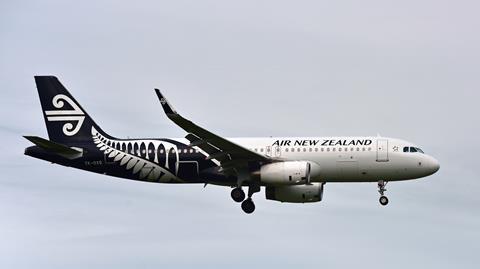
A key factor is the muted demand on domestic and US-bound flights. Air New Zealand states: “The airline had anticipated a 2% to 3% uplift in revenue across domestic and US-bound bookings. This has not materialised to date and is not yet evident in the current forward booking profile.”
The carrier forecasts a NZ$50 million revenue hit from this and with demand expected to remain “subdued”.
At the same time, Air New Zealand has disclosed higher engine lease costs, from the recognition of end-of-lease obligations that were previously not included in its earnings guidance.
These are on top of ongoing supply chain challenges, including engine reliability issues on its narrowbody (the Pratt & Whitney PW1100G) and widebody (Rolls-Royce’s Trent 1000) fleet. These have resulted in up to 11 aircraft grounded at a time.
“Air New Zealand remains in active negotiations with engine manufacturers regarding appropriate levels of compensation for unserviceable engines, and accurate timeframes for engine returns,” the carrier adds, while disclosing that the actual quantum of compensation remains “uncertain” for now.
“Air New Zealand continues to prioritise medium to long-term growth, and is carrying the cost of additional fleet, a full workforce, and the infrastructure necessary to support recovery as aircraft availability improves,” states the airline.