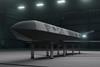
















BAE Systems’ and Lockheed Martin’s rapid innovation units have joined forces to explore the potential to develop a modular family of uncrewed aerial systems, with their early work looking at the suppression of enemy air defences (SEAD) mission.

“We have been working together now for over 12 months, trying to understand if there is an opportunity for us to bring two organisations together in this important, nascent technology area,” BAE FalconWorks managing director Dave Holmes announced at the DSEI exhibition in London on 9 September. During this phase, the companies have looked at “common, collaborative capabilities in a family of autonomous vehicles”, he adds.

“Our organisations have a history of doing rapid prototyping, advanced manufacturing and design, and it’s really exciting to see what we are going to be able to do together,” says Skunk Works general manager OJ Sanchez. “What we are talking about is being able to design together a vehicle that brings the intersection of a lot of customer needs.”

FalconWorks Skunk Works UAS

Source: BAE Systems/Lockheed Martin

Modular system will be developed initially for electronic warfare/attack applications

Sanchez describes this as requiring an adaptable design suitable for release or launch from airborne platforms – potentially including “a widebody [transport aircraft] application” – along with from the ground or naval vessels.

“We will do this together in a way that is cost-effective for our customers, easily deployable and that has the expendability that is needed in the marketplace today,” he adds.

“We see global applications across multiple missions,” he says. “The important part about this early collaboration is the collaboration – you have to be flexible,” he adds.

Sanchez says an initial concept rendering released by the companies draws on Lockheed’s work on a Common Multi-Mission Truck (CMMT) family of systems. “It will bring about the same attributes of being easily modifiable and changeable for the mission outcome,” he adds.

Lockheed earlier this year conducted flight testing with a CMMT-D compact cruise missile and smaller CMMT-X vehicle.

Holmes says a system to be employed in the electronic warfare or electronic attack/SEAD role would be in the “sub-1t category”.

“What we have seen over the last three years is the need for our warfighters to be given the capability that allows them to punch a hole through complex and denied electronic warfare environments, to make sure that the conventional fighters of today can be effective,” Holmes says. “We feel we can bring a solution which will be game changing for our end-user community.”

Pointing to the long relationship between BAE and Lockheed on the latter’s F-35 programme, he notes: “We have got a demonstrated history of working together and sharing know-how and capability. We have a common mission and common desire to bring forward real, novel solutions which will give our warfighters an unfair advantage.”

Meanwhile, Holmes tells FlightGlobal that the company’s collaboration with Skunk Works – which he describes as “the gold-seal standard of R&D [research and development] and concepting” – is a “highly complementary” activity to BAE’s stake in European guided weapons specialist MBDA.

Separately, BAE and Qinetiq plan to expand flight-test activities next year to advance the use of manned-unmanned teaming technologies. Earlier work between the pair combined operations of Qinetiq’s Avro RJ100-based airborne technology demonstrator and adapted Banshee target drones.