

















Elbit Systems UK is keenly eyeing a requirement to replace the British Army’s Watchkeeper uncrewed aerial system (UAS), and also hopes to expand its role within the UK Military Flying Training System (MFTS).

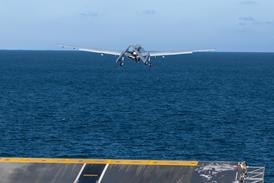
The UK Ministry of Defence (MoD) in November 2024 announced a decision to retire its Watchkeeper capability early, at that time targeting its removal by earlier this year. However, with no replacement in place, use of the type has been extended, potentially through the end of 2026.

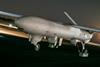
Fielded operationally from 2010, the Watchkeeper vehicle was derived from Elbit’s Hermes 450, and supplied by the company in partnership with Thales UK.

Watchkeeper UAV

Source: Crown Copyright

The British Army’s Watchkeeper system is likely to serve on through 2026

An army-led replacement effort named Corvus is now gathering pace, with a preliminary market engagement activity having been launched in April. Potential bidders are awaiting a final requirement definition, with this to be followed by release of a procurement specific questionnaire to shortlisted candidates.

“We will submit what we think will be a competitive solution, and in doing so we will address and reflect the things that have been challenging in the Watchkeeper programme,” Elbit Systems UK chief executive Martin Fausset says.

“We expect there to be a full field of capable people,” he says of potential rivals for the Corvus deal. “We’re fine with that – we are one of the world’s largest UAV companies and we’ve got significant capability.

“The requirements for the mission that they have, which is not dissimilar to Watchkeeper, can now be addressed with smaller, lighter, simpler, cheaper platforms,” he says. “You can have more capability for less money now, because UAVs have moved on.”

But unlike with the army’s in-service equipment, he argues: “You have to have a spiral development approach, and we will be proposing something which reflects that.

“Equally, you have to have an intelligent logistics solution, and enough training and simulation technology underpinning it so you can maintain pilot currency. You have got to have a flexible approach to payloads, because your missions may change,” he told FlightGlobal at the DSEI exhibition in London on 10 September.

“All of those lessons need to be fed into it. And if you are buying a large fleet, we would argue that you shouldn’t have 50 identical-configuration items.”

Confirming that the company will bid for the Corvus opportunity from its Bristol site in southwest England, he says it could look to use its existing UTacS venture with Thales – in which it owns a 51% stake – as part of its in-country supply chain for production. “It has got the clearances, qualification and workforce,” he notes.

The UK’s Watchkeeper fleet retirement decision was explained at the time as having been made because it was “a 14-year-old army drone which technology has overtaken”. In addition to concerns about the UAV’s battlefield survivability, the need to modify its ground control station equipment and training infrastructure are understood to have been further considerations.

Meanwhile, Fausset says Elbit Systems UK’s role in supporting MFTS – via its Affinity Flying Training Services joint venture with KBR – is another growth target. Affinity currently provides a fleet of Grob Aircraft G120TP Prefect elementary trainers, Beechcraft T-6C Texans employed in the basic training role, and Embraer Phenom 100s used for multi-engined crew instruction.

RAF T-6C

Source: Crown Copyright

The UK’s MFTS fleet currently includes 14 T-6C Texan basic trainers

“We see more scope for using the Texan to offload some of the flying hours out of the [BAE Systems] Hawk syllabus,” Fausset says. “Doing more on Texan, and maybe buying some more” could be an option, he suggests.

He notes that the T-6C fleet has already been expanded – to 14 examples – in support of the MFTS programme, meaning that another follow-on purchase would represent a “low-risk” step.

Additionally, “We would like to be particularly involved in whatever comes after Hawk from a provision of a service,” he adds. Elbit Systems runs contractor-supplied training services in Greece and Israel using the Leonardo M-346, while the company also supplies cockpit equipment for the Boeing T-7A, on order for the US Air Force.

“We feel that we have got more to offer than just running the maintenance, and we are talking to everybody to establish a position of relevance, as well as optimising what we have provided already,” he says.

The UK MoD acquired a 28-strong fleet of Hawk T2 advanced jet trainers independently of the cross-service MFTS programme. Industry sources indicate that a formal replacement competition is likely to take off early next year, with a new platform sought for introduction around the start of next decade.