















BAE Systems has demonstrated an electronic attack (EA) capability that can be employed by multiple aircraft platforms with varied capabilities.
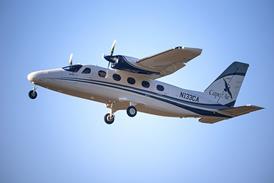
The work saw BAE collaborate with the US Air Force (USAF) and others to fly the prototype EA system housed in a pod, aboard an aircraft simulating a large uncrewed aircraft.

The company says that the system was able to run “proven counter-C5IRST [command, control, communications, computing, cyber, intelligence, surveillance, reconnaissance and targeting] software.”
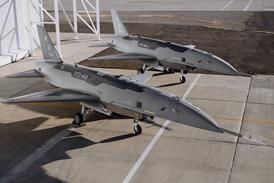
The system drew from other BAE EA systems. It can be housed in a pod, or used with collaborative combat aircraft, unmanned aerial vehicles, helicopters, and others.
Users can deliver specific C5IRST effects, or support the USAF’s dedicated EA aircraft, the L3Harris EA-37B.
“We’re showing the armed services that we can scale down our high-performance EA hardware and repurpose it for smaller nodes on the network,” says Rory Duddy, programme director for modular electromagnetic attack at BAE.
“We’re innovating to deliver a cost-efficient mix of exquisite and affordable capabilities that work together to deliver a discriminating effect on the battlespace.”
Separately, the company announced that in August it will start upgrading the USS Iwo Jima, an amphibious assault ship, to accommodate the Lockheed Martin F-35B fighter.
BAE will conduct the work in its Norfolk shipyard.