











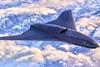

US defence manufacturer Lockheed Martin has revealed a new autonomous combat jet design the company is calling Vectis.

Unveiled on 21 September ahead of the annual Air and Space Forces Association (AFA) Air Space Cyber conference in Washington, DC, Lockheed says the new collaborative combat aircraft (CCA) “seamlessly integrates” with fifth-generation aircraft like its F-35 stealth fighter.

Developed by Lockheed’s Skunk Works advanced projects unit, Vectis is envisioned as a modular uncrewed jet with the ability to conduct targeting, electronic warfare and offensive and defensive counter-air missions, as well as intelligence, surveillance and reconnaissance flights.

“The Skunk Works team has outdone themselves, creating a highly capable, customisable, and affordable agile drone framework that’s poised to unlock new possibilities for multi-domain operations,” says Skunk Works general manager OJ Sanchez.

Lockheed_Martin_Vectis CCA

Source: Lockheed Martin

Lockheed aims to build and fly Vectis within two years

“With its unparalleled survivability and seamless integration with the F-35, Vectis is the future of air power,” Sanchez adds.

A rendering of the Vectis shows a blended-wing-body fuselage, with a single dorsal mounted air intake and delta wing shape.

Lockheed says the Vectis design “leverages decades of experience in stealth advancement to deliver best in CCA class survivability”, heavily implying the new autonomous tactical jet will have at last some degree of low observability.

Stealth capability has thus far not been a hard requirement in the effort to develop uncrewed CCA jets, which are meant to support existing and next-generation manned fighters with extra weapons and combat effectors.

The US Air Force (USAF) has the most advanced CCA development programme in the Western world, with two competing prototypes in or nearing flight testing.

The US Navy’s programme is less mature, with the service only recently issuing initial design maturation contracts to a number of prospective CCA suppliers.

Lockheed is notably absent from both of those efforts, as well as two related programmes to field sixth-generation tactical fighters for the air force and navy.

Instead Lockheed has pivoted its focus toward enhancing the combat capability of its active production F-35 fifth-generation jet, with the stated goal of delivering 80% of the capability of a sixth-generation aircraft at half the price.

The new Vectis CCA appears to be part of that endeavour.

Lockheed says its Vectis will offer “new, integrated capabilities at an ultra-competitive speed and price point”.

The company notes the new design will be offered at “a CCA price point”, which will fall somewhere below $20 million per aircraft, if hints from the General Atomics Aeronautical Systems and Anduril Industries are to be believed.

Those two manufacturers are finalists to supply the USAF’s first CCA, having respectively developed the YFQ-42A and YFQ-44A prototypes. The General Atomics aircraft has already begun test flights, while the Anduril jet is expected to begin flying shortly.

By contrast, Lockheed’s Vectis design is still some time away from getting airborne.

The company says it hopes to build and fly a Vectis prototype within two years.

Lockheed’s F-35 family is the only fifth-generation stealth fighter in active production in the Western world, with more than 1,000 examples in service worldwide.