















With fleet flexibility taking high priority for Abra Group, the Latin American airline company is keeping an open mind about where it will station hundreds of incoming narrowbody and widebody jets.
Abra Group said on 16 October it is picking up options for an additional 50 Airbus A320neos, bringing its unfilled order book to 138 of the narrowbody jets.
Additionally, it has signed a deal with Avolon Aviation to lease up to seven A330neos. That comes on top of last year’s memorandum of understanding with Airbus to take four A350-900s. Together, the incoming widebodies stand to significantly boost the group’s long-haul operations to Europe and North America.
Adrian Neuhauser, Abra Group’s chief executive, tells FlightGlobal the Airbus widebodies will shore up a relative weakness across the group’s portfolio, especially in relation to LATAM Airlines Group’s international offerings.
”If you compare us as a group to our biggest competitor in the region, we are underweight on long haul,” he says. “Ultimately, we have less connectivity to the rest of the world than our competitor does, and that is a huge opportunity if you think about long-haul being… the brightest spot in the market today.”
However, where to place those jets is unsettled. Abra Group will not decide whether to position the widebodies with Avianca, Gol or Wamos Air until closer to taking deliveries in 2026.
“That is something you’re going to see more [of] as we move forward – fleet decisions being viewed as capital-allocation decisions that are taken at a group level,” Neuhauser says. “When you think about these assets you say, ’Where is the best place to put them, and where can they drive the best result for the company?’”
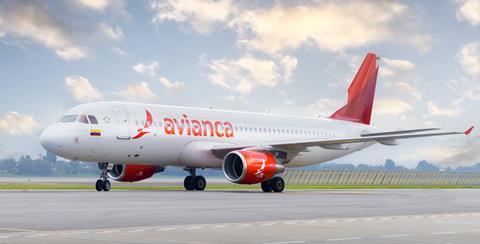
Neuhauser says Abra may not come up with a “permanent answer”, opting rather to shift aircraft between the carriers depending on demand.
“Maybe at some moment Brazil is tighter and we want to move those planes elsewhere, where in other moments we want to bring them back,” says Manuel Irarrazaval, Abra chief financial officer. ”We have the flexibility of moving planes around and thinking of things as a group across the whole region, instead of just being limited to one market.”
Such a strategy is partially aimed at buffering the company from market and demand volatility that comes with the territory in Latin America, where rapid growth in one country could offset sagging demand in another.
Abra’s carriers do not currently operate A330neos, though Avianca Cargo flies nine A330 Freighters and Madrid-based Wamos deploys 13 older A330s in its charter and wet-lease operations.
Avianca had phased out previously operated A330s during the Covid-19 pandemic.
Neuhauser says Abra expects to receive the leased A330neos in 2026. The incoming jets ”are a very similar aircraft” to previous-generation A330s, with “upgraded technology and different engines”.
“So, there’s some induction work we need to do there, but the aircraft we’re very comfortable with, and we have a deep relationship with Airbus,” he says. “There is a lot of training commonality with the A320 family and obviously with the A330s.”
On the narrowbody side, Abra Group has 234 single-aisle jets on order: 96 Boeing 737 Max aircraft and 138 A320neos.
Though Avianca operates A320s and Gol flies the 737 Max, the fleets may not remain strictly separated.
“We have scale in both families,” Neuhauser says. “Is it worth it to take on the complexity of crossing them over or not? It’s a decision we haven’t made. Today, obviously, we’ve kept them segregated. In the future, it will depend on how things evolve between demand, between deliveries, between the way the aircraft themselves behave and their capabilities.”
Engine availability is a major “moving variable” that may determine where Abra positions narrowbody jets across Latin America.
On 15 October, Abra filed papers with the US Securities and Exchange Commission proposing it become a publicly traded company.