











UK rotorcraft start-up Hill Helicopters has further delayed the first flight of its developmental HX50 light-single, pushing back the milestone until late 2026.
Issues completing the parallel development of Hill’s GT50 turbine engine are behind the latest slip, the would-be manufacturer has disclosed.

According to the firm’s most recent timeline, a full engine run was to have been achieved by December this year, leading to a first flight around six months later.
But Hill Helicopters now expects the first engine run to take place in April 2026, pushing back the maiden sortie until December that year.
Production of the uncertificated aircraft for owner-fliers will begin in December 2027, leading to first deliveries that same month.
When the programme was first disclosed in 2020, deliveries were expected to begin in 2023.
A fully certificated variant designed for commercial use, the HC50, will follow around two years later, says founder and chief executive Dr Jason Hill.
Speaking on a 27 October company update, Dr Hill said the design of the GT50 was now complete, including the modifications required for instrumentation, with parts now cleared for manufacturing. “It has just taken us a little bit longer than we wanted it to,” he says.
But with certain components having a lead time of up to six months to produce, given the complexity or number of processes involved, the lengthy design and verification effort has impacted the overall schedule.
However, Dr Hill says he is “happy that everything about the GT50 is as good as it can be”, prior to the first run.
Around 1,000h of ground testing will performed “before we do any significant flying with it in terms of developing the aircraft,” he says. However, Hill will “almost certainly” use a lower-hour engine for the first flight to maintain the schedule.
“We want a mature engine before we do too much flight testing otherwise we are just compounding the risks.”
Besides the engine major parts of the HX50 airframe are transitioning from design into the production and test phase.
Hill’s model is for almost complete vertical integration, using the savings from designing and making most of the helicopter and its engine in house to drive down the upfront and in-service costs of the aircraft for customers.
But in addition to developing the parts in-house, it has also required significant investment in the production system needed to make them.
While acknowledging the “huge challenge” involved, Dr Hill says “getting robust control of costs is the only way to make this [general aviation] industry work”.
Hill’s funding model is also different to many of its peers: customers pay a non-refundable deposit in return for a production slot – early backers received steeper discounts – with the money used to fund the development programme.
Dr Hill says the company is in a “really strong position financially” but points out that with an orderbook in excess of £7 million ($9.2 million), covering more than 1,400 helicopters, the business is “the most investable GA proposition anywhere” should external finance be required.
Annual production will be set at 500 aircraft in the first year, subsequently rising to 1,000 units.
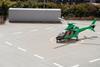
Designed to carry one pilot and four passengers, the composite HX50 will cruise at 140kt (260km/h) and fly around 700nm (1,300km). It features a three-blade main rotor and shrouded tail rotor.