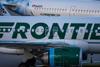












Frontier Airlines chief executive Barry Biffle asked US lawmakers on 30 September to embrace consolidation and greater cooperation within the low-cost airline sector, floating the idea of granting small market players antitrust immunity to better compete with the “Big Four” US airlines. 

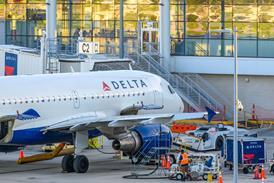
Appearing during a US Senate judiciary subcommittee hearing on airline competition, Biffle protested how the US airline sector has become increasingly dominated by American Airlines, Delta Air Lines, Southwest Airlines and United Airlines, which combined account for some 80% of the country's air travel market share. 

Critics of this “airline oligopoly” such as Biffle point to the US government’s creation of such behemoths by allowing decades of sector consolidation, then blocking tie-ups between much smaller players – such as JetBlue Airways and Spirit Airlines. He says those moves have suppressed meaningful competition and entrenched the advantages of major carriers. 

”We created a system of the Big Four controlling over 80% of market, and then two of the small players were trying to get together,” he says. ”I mean, I found it laughable that anyone would think that was something that should be stopped.”

Notably, Frontier has also made multiple attempts to acquire rival ultra-low-cost carrier (ULCC) Spirit, though its advanced have been repeatedly spurned by the Florida-based discounter, which is now working through its second Chapter 11 bankruptcy process in less than a year. 

It is unclear if Frontier is still interested in such a deal, though Biffle's remarks suggest that he is supportive of the general idea. Spirit, meanwhile, maintains that it will steady itself through restructuring and emerge as a healthy standalone business. 

shutterstock_2683425133

Source: Shutterstock

Consolidation could be in the cards if Frontier's Biffle gets his way 

Biffle has previously opined that the domestic market has long been oversaturated with low-cost airline seats, and that consolidation could be inevitable if market trends do not improve. 

This week in Washington, DC, he pitched to senators that anti-trust immunity should be granted to “all of the other small carriers” to encourage combinations, or at least greater coordination between ULCCs. 

”Your job should be to say, if I really want to fix these things, what should I go do? You should give us all anti-trust immunity,” Biffle says. 

Pressed by Republican Senator Mike Lee on whether granting low-cost carriers anti-trust immunity could lead to further airline “collusion”, he responded that loosening anti-trust laws may not lead to more outright acquisitions, but could lead to greater cooperation between Frontier and other discounters such as Allegiant Air

"If our teams were together on coordinating schedules so that we better mash up our schedules so that we run a better, reliable operation in fill-in-the-blank city," Biffle says. "The big airlines get to do that." 

Though Biffle's voice has been loudest, others in the sector have acknowledged potential benefits of tie-ups between US discounters. 

In February, Dave Davis – then Sun Country Airlines' chief financial officer, and now CEO of Spirit – said that he believed consolidation within the ULCC sector could be healthy for the market.