








After two decades of debate in Washington, a US president finally ordered military strikes on Iran’s nuclear weapons development programme.
An intercontinental air raid carried out over the weekend saw a flight of US Air Force Northrop Grumman B-2 stealth bombers launch from Whiteman AFB deep in the continental USA and transit non-stop across the Atlantic Ocean and Mediterranean Sea to drop bunker busting munitions on two Iranian nuclear enrichment facilities.
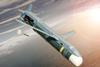
A third site was targeted by Tomahawk cruise missiles launched from a US Navy nuclear-powered submarine.
The operation, dubbed Midnight Hammer, was a potent demonstration of modern air power, showcasing for the world Washington’s unparalleled capability in deep penetration stealth, aerial refuelling, and sheer mass.
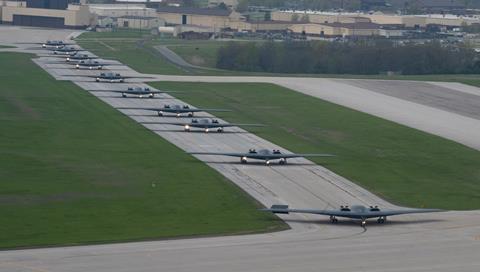
The sortie included more than 125 aircraft, dozens of which were tankers providing the critical in-flight top offs needed to execute the non-stop 36h round-trip mission. Seven B-2s dropped ordnance on Iran, while other stealth bombers were deployed westward into the Pacific as a diversion.
Notably, that effort at misdirection was not entirely successful. At least one US resident living near the stealth bomber base in Missouri claims to have witnessed the B-2 sortie launching, noting his observation on the social media site X.
Chairman of the US joint chiefs of staff General Dan Caine on 22 June described the mission as the largest B-2 combat operation in history – and the iconic flying wing’s second-longest mission ever.
The USA’s small fleet of B-2s are now 30 years old on average, but have clearly retained every bit of their potency.
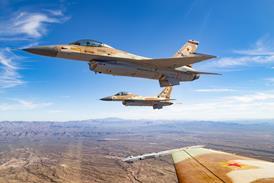
Pushing ahead of the bombers and tankers were dozens of fourth- and fifth-generation fighters, which the Pentagon says were used to sweep for enemy interceptors and ground-based air defences.
Even before the B-2s had landed in Missouri, the Pentagon was touting the lack of resistance from either form of Iranian defences. Whether this is an indicator of the B-2’s enduring stealthiness or more a result of the Israeli air force bombing campaign that pummelled Iran for two weeks ahead of the US strike remains a matter of debate.
At least 75 individual guided weapons were used in the strikes, according to the Pentagon, including the first-ever combat use of the GBU-57 Massive Ordnance Penetrator bomb. Fourteen of those 13,600kg (30,000lb) anti-bunker weapons, developed during US President Donald Trump’s first term, were employed.
Trump lauded the operation as an unequivocal success, saying Iran’s key nuclear enrichment facilities had been “completely and totally obliterated”.
The Pentagon later admitted it had not completed a battle damage assessment at the time Trump made the claim.
Iran vowed revenge, and on 23 June fired multiple ballistic missiles toward Al Udeid air base in Qatar: home to a key US Combined Air Operations Centre. The weapons were intercepted, and within hours a ceasfire agreement was announced which is intended to halt further exchanges between Iran and Israel.
Amid the continued heightened tensions in the Middle East, national leaders from the 32 members of the NATO military alliance are gathering in the Hague this week for their annual summit, running from 24-25 June.
Primarily at issue is whether or not the alliance will increase its member state defence spending target from 2% equivalent of national gross domestic product. Defence ministers recently agreed to boost this to 3.5%, rising to 5% when accounting for broader investments in defence and security. However, a timeline has yet to be set out, and Trump has indicated that even Washington is unlikely to hit the latter amount.
Regardless of the exact target, the ongoing surge of defence spending across Europe looks set to continue, with continental manufacturers likely to see outsize benefit, as European leaders seek to reduce their dependence on American defence firms.
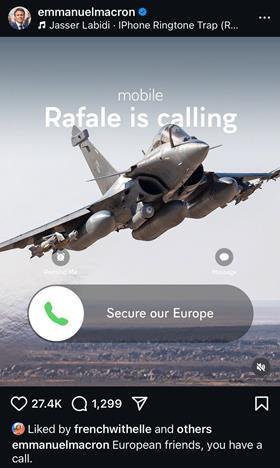
At last week’s Paris air show, a Dassault Aviation advertisement in Flight Daily News touted the French-made Rafale fighter as “the choice of sovereignty”.
That was followed by French President Emmanuel Macron posting a Rafale image to Instagram with the caption, “European friends, you have a call.”
Catch up on all the news from Paris you may have missed last week, including a transatlantic industrial partnership to build US-designed uncrewed fighters in Europe, France’s plans to purchase airborne early warning aircraft from Saab, and growing cracks in the multinational Future Combat Air System programme to develop a sixth-generation fighter and supporting technologies.
Find those and all our stories on the FlightGlobal defence landing page.