

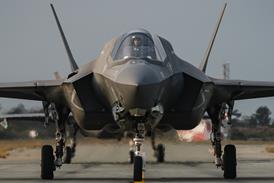












Following a weeks-long build-up of US military hardware in the Middle East, it was not a big surprise when Washington launched air strikes against Iran on 28 March, after attempts to de-escalate tensions via negotiation drew a blank.
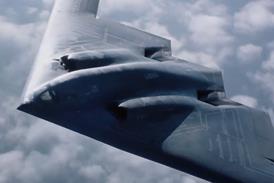
But unlike last year’s audacious Midnight Hammer raid – during which US Air Force (USAF) Northrop Grumman B-2 stealth bombers targeted Tehran’s illicit nuclear sites – this operation instead went for the “head of the snake”, as it were.
By eliminating Iran’s spiritual leader, Ayatollah Ali Khamenei, the US and its ‘Epic Fury’ campaign partner Israel intended to facilitate swift regime change. However, despite recent large-scale protests which had been suppressed by the authorities in Tehran, the Islamic Republic’s house of cards has so far failed to topple.
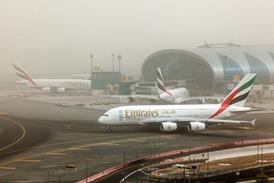
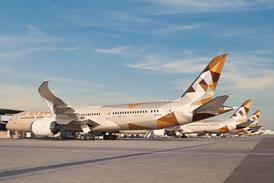
Instead, the kinetic action has plunged the wider Middle East into a fresh period of instability, with the region’s vulnerability as a major hub for international travel also having been highlighted by airliners staying firmly on the ground.
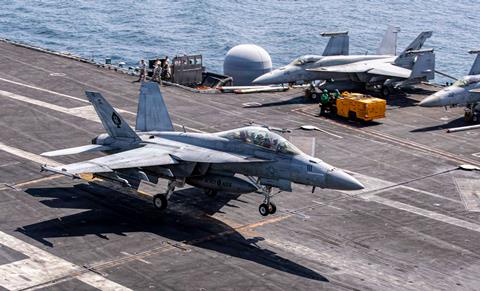
So far, Tehran has launched ballistic missile and drone strikes against locations in Bahrain, Iraq, Qatar, Saudi Arabia and the United Arab Emirates. Not only has it targeted military bases housing or supporting US forces, it also has struck civilian sites such as international airports, hotels, and energy infrastructure.
Intriguingly, the US has in retaliation for the first time employed its Low-cost Unmanned Combat Attack System: a design reverse-engineered from Iran’s own Shahed-136 one-way attack drone.
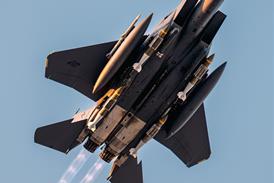
The “fog of war” also has been in evidence, with gaps in coordination between the US military and its local hosts having resulted in a notable incident on 2 March. Twitchy air defences in Kuwait jumped into action, accidentally downing not hostile Iranian aircraft or drones but three USAF Boeing F-15Es.
All six crew members aboard the strike aircraft ejected from their jets and survived.
Qatar, meanwhile, later the same day reported that its air force had shot down two Iranian Sukhoi Su-24 ground-attack aircraft, without providing further details.
Notably, Washington’s western allies have not – as yet – joined any combat action, although Royal Air Force (RAF) fighters have successfully engaged one-way attack drones targeted at the UK’s Akrotiri base in Cyprus.
After initial hesitancy, London gave its permission for the USAF to operate from UK-owned sites including Diego Garcia for defensive missions, such as targeting ballistic missile launch sites.
Spain, however, refused to allow American support assets to fly from its territory, prompting the relocation of some jets.
Meanwhile, operational security faces a new challenge, with a Chinese company having freely posted satellite imagery of the US equipment build-up in the region, and also tracking the movements of its two locally-positioned aircraft carriers. It is unclear whether that might have aided targeting by Iranian forces.
In other news, the UK Ministry of Defence has finalised a long-delayed £1 billion ($1.3 billion) deal to acquire a New Medium Helicopter fleet for use by the RAF. After warning that a contract was vital to safeguarding jobs at its Yeovil manufacturing plant, Leonardo Helicopters has secured a firm commitment for 23 of its AW149 super-medium-twin.
And don’t miss our coverage from the Air & Space Forces Association Warfare Symposium in Denver, Colorado, including a first glimpse of a stealthy new external fuel tank design for the USAF’s Lockheed Martin F-22 Raptor, and confirmation of a production acceleration for the Northrop B-21 Raider bomber.
Keep up with all the latest military aviation news by visiting FlightGlobal’s dedicated defence landing page.