














Dutch carrier KLM is objecting to a proposed night closure of Amsterdam Schiphol, after the coalition government laid out aviation plans in a five-year agreement which include opening Lelystad airport to flights.
The coalition of three political parties – the D66, VVD and CDA – presented their agreement, titled ‘Aan de slag’, on 30 January.
Its aviation section highlights Amsterdam Schiphol’s hub function as being “vital to the Dutch economy” while recognising that aviation “places a burden” on the environment, climate, and airport surroundings.
The agreement says the coalition is “creating a balance”, which will put a limit of 478,000 aircraft movements on Schiphol while allowing Lelystad airport, also owned by Royal Schiphol Group, to open to traffic – initially permitting 10,000 movements.
Lelystad will operate as a dual-use airport in collaboration with the military. The plan is conditional on Lelystad meeting all legal requirements and obtaining an environmental permit.
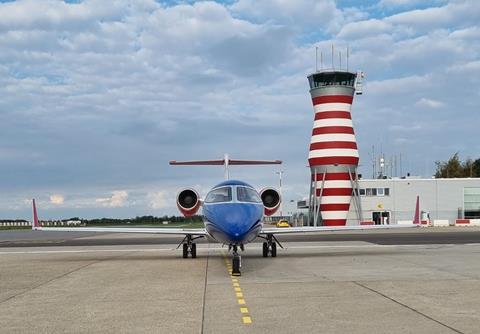
The airport’s chief, Jan Eerkens, says the coalition agreement means Lelystad can “finally open as a fully-fledged passenger airport”, expecting its first flights – to leisure destinations – in 2027.
But the agreement also aims to halve overnight noise at Schiphol by 2030, adding that its plans include a 5h night closure from midnight. Total carbon dioxide emissions from civil aviation at Schiphol and Lelystad must be lower in 2030 than in 2024, it adds.
KLM says the proposed night closure “runs counter” to the coalition’s aim to make the Netherlands the strongest economy in the European Union.
The airline emphasises the hub’s role in supporting the economy through a competitive aviation sector.
“KLM remains committed to cleaner and quieter aviation, while maintaining our international connectivity,” it adds. “We look forward to engaging with the new cabinet and Parliament on the implementation and execution of these plans.”
The coalition agreement states its commitment replacing the national aviation tax with a tax which is the same for all EU countries.
“This will allow for a level playing field to reward the use of cleaner aircraft types and promote sustainability,” it says.
KLM views this aim as “positive” and is pressing for a “swift first step” to align the Dutch aviation tax “at least” with that of Germany, to remain competitive with EU neighbours.