













China’s ambition for military domination of the Western Pacific has been apparent for nearly two decades.
Should Beijing seek to conquer neighbouring Taiwan, it will be imperative for the People’s Liberation Army (PLA) to either deter the USA from intervening or, in the event Washington, DC decides to support Taipei, to keep US forces at bay.
Beijing has developed a wide range of military capabilities to achieve these aims. Its ever-growing arsenal includes anti-ship ballistic missiles as well as a plethora of anti-ship weapons that can be launched from ships, submarines, and aircraft such as the Xian H-6 bomber. American air bases in the region will be subject to barrages of missiles should hostilities erupt.
To support its missile capabilities, Beijing is investing in unmanned air vehicles that are likely to play a major role in kill chains designed to find, fix, and destroy US targets. US commanders have said that the PLA may even deploy aircraft carriers and their highly capable escorts to the east of Taiwan in the event of a conflict.
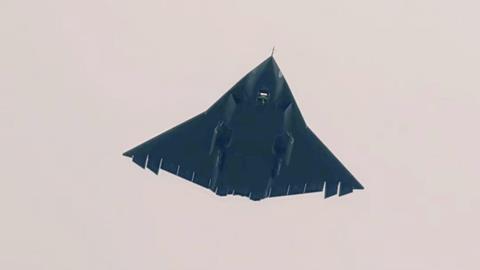
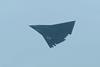
The new three-engined combat aircraft undergoing flight testing in Chengdu, which Internet observers have unofficially dubbed the ‘J-36’, is clearly part of this broader plan to engage US forces at extreme ranges.
The J-36’s massive size, three powerful engines, and stealthy shaping indicate that it is optimised for long-range operations. The aircraft is all but certain to feature a powerful sensor array and robust datalinks, with the three engines providing abundant electrical power for sensors and systems.
As with the Chengdu J-20, which is already in mass production, the J-36 is likely to be equipped with potent long-range air-to-air missiles. Its presence, along with other capabilities China is deploying, could push vulnerable American support aircraft – such as tankers and surveillance assets – even further from the fight.
Curiously, the West is getting a good glimpse of the J-36 during its test flights over Chengdu. We break down what is visible so far about the J-36’s design and capabilities.
While pundits speculate about the J-36’s ability to be a centrepiece of future Chinese kill chains, the China Aerospace Studies Institute suggests that Beijing still has some way to go with manned-unmanned teaming.
In other coverage, Saab is confident of locking down Gripen E/F contracts in Colombia and Thailand this year, while Textron suggests that Bell’s developmental Future Long-Range Assault Aircraft will have an unmanned option.
For more on this and other military aviation topics, visit FlightGlobal’s defence landing page.