














While recent experience cautions against making predictions that are too definitive – geopolitical turbulence and industrial failings have a habit of ruining any prognostication these days – based on the latest data at least, there is some positive momentum.
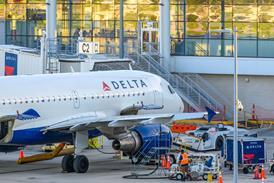
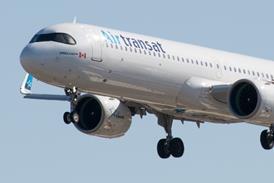
Released in recent days, the June delivery figures for both Airbus and Boeing show the numbers trending in the right direction. During the month, the European airframer handed over 63 aircraft, against 51 in May, while Boeing shipped 60 jets versus 45 in May.
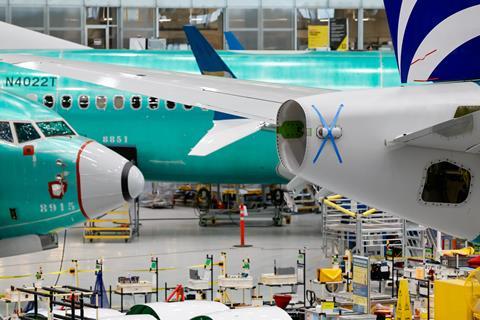
No-one is claiming the supply chain issues that have proved such a stubborn drag on production rate increases have gone away – most observers see them persisting for another 18 months at least – but both airframers do appear to be making progress.
Of course, the issues experienced over the preceding months are still visible in Airbus’s numbers for the first half of the year: it shipped just 306 aircraft in the six months ended 30 June, lagging the 323 it handed over in the same period of 2024.
It is not an insurmountable deficit, but Airbus still has work to do if it is to meet its target and surpass last year’s total across the full 12 months.
Much of the shortfall has been attributed to delayed deliveries of engines for the A320neo family, mostly the CFM International Leap-1A. However, Safran Aircraft Engines – one half of CFM and which assembles the -1A variant – promises that it is recovering and will meet the joint venture’s goal of raising output year on year.
Boeing’s year-on-year delivery figures for the first half show more striking progress – 280 v 175 – but the US manufacturer has been building from a low base; 2024 was another year in which self-inflicted wounds and supplier issues conspired to keep output low.
Speaking of problematic suppliers, Boeing’s planned acquisition of aerostructures manufacturer Spirit AeroSystems, although showing no immediate sign of closing, continues to advance.
Notably, Spirit has confirmed that Boeing will become the owner of the non-Airbus parts of its operation in Belfast, Northern Ireland after no alternative buyer emerged. Production is centred on structures for business jets built by Bombardier – the site’s former owner.
And in a sign of easing trade tensions – at least for now – GE Aerospace and CFM have been given the go-ahead to restart deliveries of engines to Chinese airframer Comac by the USA. Shipments had been halted since May.