















Producers of military jet engines are rolling out new lines of small turbofans, eyeing an expected boom in demand for uncrewed fighter aircraft.
US propulsion suppliers Pratt & Whitney (P&W), GE Aerospace and Honeywell are each advancing designs for engines falling roughly in the range of 800-1,600lb (3.5-7.1kN)-thrust – substantially less than engines powering existing tactical jets.
The strategic shift is being driven by the Pentagon’s emphasis on rapidly fielding a new class of low-cost, autonomous fighter jets known as Collaborative Combat Aircraft (CCA).
The US Air Force (USAF) is in early stages of flight testing a first increment of CCAs, with the goal of selecting a design in the second half of 2026. Meanwhile, the US Navy has kicked off its own CCA development effort, issuing an initial round of research and development contracts with several potential suppliers.
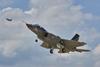
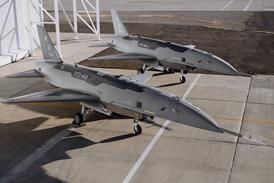
General Atomics Aeronautical Systems’ YFQ-42A began flight testing in August with an undisclosed powerplant. The company previously told FlightGlobal the design is compatible with at least 13 commercial jet engines. Anduril’s competing YFQ-44A, which is set to fly in October, is powered by a Williams International FJ44 business jet engine. One of those jets is to be selected as the USAF’s first frontline CCA.
While the initial CCA seems likely to fly with a commercially available business jet engine, the second increment of CCAs – which are expected to be more capable – seem likely to have purpose-built powerplants.

At the Air & Space Forces Association (AFA) event in Washington, DC from 22-24 September, the major engine makers, along with several new start-ups, lauded their efforts to bring CCA powerplants to market.
“There’s really not an existing propulsion solution,” says TJ Pope, senior director of engines strategy for Honeywell. “As the customers started articulating the mission outcomes that they’re looking for… we realised that it didn’t fit neatly into anything that we, or anyone else, currently have in our portfolio.”
Although the USAF is still developing requirements for the second increment of CCAs, industry officials tell FlightGlobal they expect the service to pursue two aircraft of differing sizes, with separate propulsion requirements.
The smaller jet will use an engine in the 800-1,600lb-thrust range, while the larger will require between 5,000-6,000lb of thrust.
Large fighter engines like P&W’s F135 or GE’s F110 provide thrust output in the tens-of-thousands of pounds, while existing small UAVs like General Atomics’ MQ-9A and MQ-9B are powered by small turboprops unsuitable for CCA performance requirements.
With hundreds or thousands of potential CCA orders possible, propulsion suppliers are rushing in.
Honeywell plans to leverage its expertise in assembling auxiliary power units (APUs) to develop a small turbofan engine it dubs HON1600.
That powerplant will support both turbofan and turbojet variants, with a target of 800-1,600lb-thrust.
Pope says Honeywell already produces more than 2,500 APUs annually in that class; they are installed on large passenger jets assembled by Boeing and Airbus.
“Those pieces of turbomachinery are the same size as a small-class engine,” Pope says. “It’s actually a fairly easy lift for us. We’re the lowest-risk, least-complex option.”
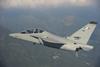
For larger increment-two CCA powerplants, which are expected to fall in the 5,000-6,000lb-thrust class, Honeywell plans to offer a derivative of its F124 fighter engine. That 6,300lb-thrust turbofan powers seven fighter types, including Leonardo’s M-346 trainer and light-attack jet.
FlightGlobal recently experienced the F124 in action during a demonstration flight of Textron’s Beechcraft M-346N test demonstrator.

Pope says Honeywell is moving forward with some “educated assumptions” about what performance and design traits the USAF will ultimately want, as manufacturers await an official request for proposals on the second increment of CCAs.
Other propulsion suppliers are similarly leaning forward.
RTX subsidiary P&W unveiled its own line of small engines at the AFA event, targeting output in the 500-1,800lb-thrust range for both CCA and long-range munition applications.
The company also revealed it has completed tests exploring the potential to adapt existing P&W commercial engines for use with CCAs, saying: ”Testing confirms that the business can increase thrust on these existing engines for use on CCA platforms”.
The test campaign examined whether high-bypass commercial turbofans designed to be externally mounted could be applied to CCA applications, which the company notes “favour embedded engines that offer maximum manoeuvrability and range”.
Jill Albertelli, P&W president of military engines, says the results have unlocked a 20% increase in the qualified thrust capability of the company’s commercial off-the-shelf powerplants in unmanned applications.
“This means that we can deliver increased performance from these production engines… [and] allow for reduced cost and weight for multiple applications,” she notes.
P&W is planning a second series of tests focused on inlet airflow and pressure variations for engines embedded within an aircraft, which could suffer performance impacts if airflow is interrupted or blocked.
The company says its next test campaign will intentionally distort airflow to document performance and produce a reliable prediction tool for future installations.
Rival GE Aerospace is advancing its small-engine design, which it is developing and producing under a partnership with uncrewed aircraft manufacturer Kratos, announced in 2024.
At the AFA conference, GE said it has started putting its GEK800 through high-altitude laboratory testing at Purdue University in Indiana, focusing on 5,000-35,000ft altitudes.
“The GEK800 engine has performed well and exceeded our expectations in its ground testing to date,” says Mark Rettig, general manager of business and technology development at GE’s Edison Works.
The propulsion manufacturer describes the GEK800 as an 800lb-thrust jet engine that can power a range of uncrewed aircraft and munitions. A larger, follow-on engine dubbed the GEK1500 will be developed based on the smaller 800 variant.
“Our team is uniquely positioned to bring these advanced designs into high-rate production to support the rising demand for propulsion systems for cruise missiles and CCA-type aircraft,” says Stacey Rock, president of Kratos Turbine Technologies.
The GE-Kratos team has completed more than 50 engine starts as part of its ground testing.
In June, Kratos announced plans to build the new powerplants in Oklahoma starting in late 2026, with an initial production target of 500-1,000 GEK800s and GEK1500s annually.
Rolls-Royce is also seeking to capitalise on its existing engine offerings in the CCA space.
The company’s AE3007-series turbofan is already installed on the actively serving Northrop Grumman MQ-4C maritime patrol UAV, as well as powering the developmental Boeing MQ-25 autonomous refueller, which is set to become the US Navy’s first carrier-based uncrewed aircraft.
Rolls-Royce has also developed a family of small turbofan engines dubbed Orpheus, specifically aiming at the CCA low-cost propulsion market.
The effort focused on additive manufacturing and even tested the novel approach of recycling engine blades from a retired UK Royal Air Force Panavia Tornado fighter.

The business potential of supplying CCA propulsion is significant enough that several start-ups are also springing up to offer small engines.
Colorado-based Beehive Industries is testing a line of small turbojets called Frenzy, being developed under contract from the Air Force Research Laboratory. The company says it is preparing to deliver one of the new powerplants – a 200lb-thrust model – to the air force for evaluation.
Frenzy engines range from 127-203mm (5-8in) in diameter and deliver 100-300lb of thrust for long-range cruise missiles and uncrewed aircraft. Beehive hopes to begin rate production of the turbojets next year.
Another new entrant, JetCat Defense, was formed in March as a joint venture between BSEL and German small engine maker JetCat. Based in Ohio, the firm was organised specifically to address the USAF’s goal of so-called “affordable mass”.
JetCat is offering two CCA engines, including the 200lb-thrust-class P850, a scaled version of the firm’s P1000, a small turbine powering remote-controlled aircraft.
“Its thrust-to-weight ratio makes it well-suited for applications where weight and space are at a premium but electrical power demands are increasing,” JetCat Defense says of the P850.
The company is also offering its 100lb-thrust P420, based on JetCat’s P400, which is also used by radio control hobbyists.
“Both engines are engineered as turnkey solutions, with all subsystems and accessories required for operation integrated into the engine volume,” JetCat Defense says. “The designs are optimised for cost efficiency through extensive use of commercial-off-the-shelf components, eliminating reliance on exotic materials and mitigating supply chain constraints.”
The company says it is accepting orders for both engines, with low-rate production planned in 2026 and full-rate to be achieved in 2027.
The USAF expects to award initial development contracts on the second increment of CCA platforms in the next six months.
Separately, the Pentagon is pressuring defence manufacturers to drastically increase output of long-range missiles and other precision munitions, further boosting the need for low-cost and production-ready propulsion systems.
As the USAF gets its first FQ-designated uncrewed fighters into service, allied and rival services around the world are expected to follow, giving engine makers more opportunity to gain a foothold in the burgeoning sector.