







Norwegian investigators have determined that weak altimeter procedures resulted in a Wideroe De Havilland Dash 8-300 crew’s forgetting to set and check the correct QNH pressure during an approach to Svolvaer airport.

The turboprop had been inbound from Bodo, in darkness, on 22 December 2022.

Once the aircraft began descending for the approach, its altimeter was still referencing the standard QNH pressure setting of 1013hPa rather than the local figure of 987hPa – which meant the Dash 8 was flying some 700ft below the altitude indicated to the pilots.

The ground-proximity warning system alerted the crew when the aircraft was 3.1nm from the threshold of runway 01, prompting the pilots to abort and return to Bodo.

Norwegian investigation authority SHK says the crew had originally been cleared to descend from 9,000ft to 4,000ft – a clearance which would normally have triggered the crew to set the correct altimeter reference pressure.

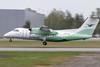
Dash 8 LN-WIP-c-SHK via Jan Lennart Gulbrandsen

Source: SHK/Jan Lennart Gulbrandsen

As the aircraft (LN-WIP) descended, its crew left the pressure reference at the standard, rather than local, setting

But this descent was delayed because the crew had to enter a holding pattern for 10min while snow was cleared from the runway. SHK says this delay could have led the pilots to forget the altimeter change.

When the runway re-opened, the captain, who was flying, decided – “without discussing the matter” with the first officer – that they would conduct a localiser approach, rather than a satellite-based one, even though this involved a higher workload.

SHK says the first officer was “not sufficiently included” in the decision-making process, including the choice of approach and the start of the descent, and it believes this was a “contributing factor” to the crew’s forgetting to set the local QNH on the altimeter.

“Local QNH is normally set as descent towards the first altitude begins,” it states. “Since this is the trigger for performing the approach checklist, that too was forgotten.”

While the checklists and procedures used by Wideroe to set the correct QNH were considered to be individual barriers, SHK points out that they had “dependencies” which made them “less efficient”.

Under normal circumstances the local QNH would be set once, and checked three times before landing. But the heavy workload created by the choice of a localiser approach probably contributed to a failure to complete procedures.

The approach was conducted in darkness and instrument conditions, and an aural ‘500ft’ alert sounded in the cockpit.

“At this point, the [first officer] began to feel that there was something wrong,” says SHK. Shortly afterwards, the ground-proximity warning system sounded at 324ft and issued a ‘pull up’ instruction.

The crew’s prompt reaction meant the Dash 8 lost only 10ft of height and it was climbing within 6s of the warning.

After realising the QNH setting error, and the gravity of the incident, the crew opted not to attempt a second approach and instead returned to Bodo. They relieved themselves from duty and ensured the flight-recorder data was preserved.

None of the 29 passengers and three crew members was injured.