











Strategic transactions reshape the aircraft actuation market after US Department of Justice required divestiture to address competition concerns in critical flight control systems

French aerospace firm Safran has acquired a flight control and actuator business from Collins Aerospace and sold a separate competing North American actuator business to US aerospace firm Woodward.

The deals come after the US Department of Justice (DOJ) last month green-lighted Safran’s purchase of the Collins assets on condition that the Safran divest its existing actuator business.

Safran confirmed on 21 July having closed both deals. Neither it nor Collins have disclosed sale prices. Woodward declines to comment but describes its acquisition of Safran’s actuator business as “not financially material”.

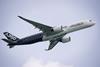
A350-c-Airbus

Source: Airbus

As part of acquiring the Collins work, Safran divested to Woodward a separate actuation business that makes products including the A350’s horizontal trim actuation system

The assets acquired by Safran produce flight control and actuation components, including, critically, “trimmable horizontal stabiliser actuators” (THSAs) for large passenger aircraft. The components are found on some 180 platforms, according to Safran and to court papers.

The business is worth $1.8 billion, generated $1.55 billion in 2024 revenue, employs some 4,000 people and operates in Asia, France, India, Italy, Poland, the UK and the USA.

“This acquisition offers a unique opportunity to solidify our position in mission-critical flight control and actuation functions and create a global leader in this domain,” says Safran chief executive Olivier Andries. “It will enable us to deliver a comprehensive offering to our customers and position us extremely well for next-generation aircraft.”

Safran calls its new actuator business “highly complementary” to its existing hydraulic and electromagnetic actuation products. It says it is now better positioned to capitalise on expected heightened demand for electric aircraft systems.

The French firm in 2023 revealed its intention to buy the operation from Collins, a division of RTX.

But the deal ran afoul of US regulators because both Collins and Safran were producers of THSAs for large passenger jets.

The DOJ threatened in June to block the deal on anticompetitive grounds. Safran and RTX “respectively won two of the most-significant recent contract awards for THSAs for large aircraft: the Boeing 777X and the Airbus A350”, government lawyers said in court filings.

But the government stepped aside when Safran agreed to sell off its existing North American actuation business to Woodward. The package was to contain Safran’s THSA business, assets related to secondary flight control actuation and to nose-wheel-steering gearboxes, and Safran Electronics & Defense in Canada, a producer of electronic control units, court papers said.

Woodward confirmed on 21 July it acquired Safran’s electromechanical actuation business, with assets in Canada, Mexico and the USA. It notes that the business includes the Airbus A350’s horizontal stabiliser trim actuation system – “one of the most-advanced electromagnetic control technologies”.

Those assets have changed hands several times in recent years, having last decade been owned by Rockwell Collins, which was acquired by United Technologies (UTC) in 2018. That deal formed Collins Aerospace.

Because Rockwell and UTC at the time both produced THSAs, the DOJ required that UTC divest Rockwell’s THSA business as a condition of approving the deal. Safran acquired it.

Raytheon – now RTX – acquired Collins Aerospace when it merged with UTC in 2020.