













It may not have had the speed of the race to the Moon in the 1960s, but for a nation that launched its first satellite only at the dawn of this century, the United Arab Emirates’ ascent as a space power has been stellar.
Back in 2000, the UAE’s first step beyond the Earth’s atmosphere was commissioning the Thuraya-1 satellite from Boeing to provide service to Abu Dhabi company Thuraya’s satellite phones.
However, the young nation’s ambition to be a major player in the sector – with a thriving domestic industry and competencies in satellites, imaging and data technology, planetary exploration, and space science – was soon to become evident.
The Dubai-based Mohamed bin Rashid Space Centre (MBRSC) was formed in 2006 to lead the nation’s research and development efforts, while the UAE Space Agency followed in 2014 with a remit to champion the sector and be the country’s voice in the international space community.
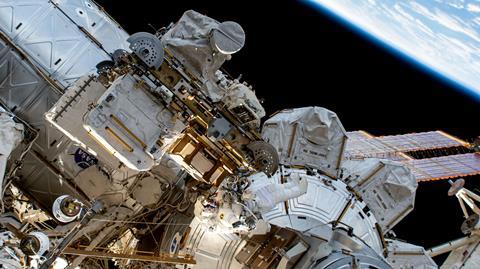
Since then, the UAE has made giant leaps, taking part in a lunar mission, sending a probe to Mars and astronauts to the International Space Station (ISS), and launching several satellites, including with home-grown payloads.
Its space workforce has also grown from a handful of scientists and government officials a decade ago, to an industry employing thousands, ranging from those engaged in satellite payload projects at national defence house EDGE to agile small and medium-size enterprises (SMEs).
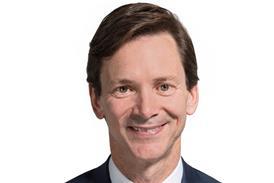
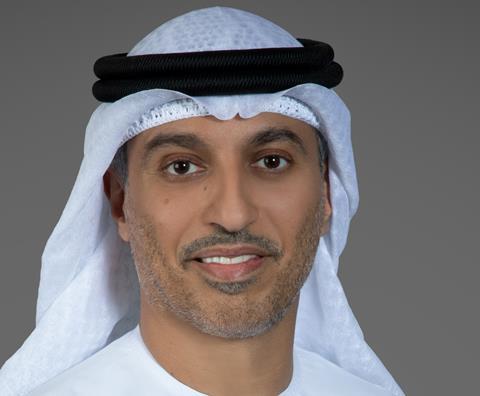
“We have today a comprehensive space system made up of government agencies, academia and a thriving private sector,” says His Excellency Dr Ahmed Belhoul Al Falasi, the chairman of the UAE Space Agency.
The role of the state and the agency itself is as an “enabler”, attracting and enabling investment, rather than the driver behind every industrial programme and technological development, according to Al Falasi, who is also the country’s sports minister.
“The success of the space sector relies on the government being a catalyst, but it is equally important to have a thriving private sector. Look at how the USA and Japan have done it,” he says. “We want to play the role of global hub, attracting overseas companies to come here, and helping local companies get on their feet.”
One of the initiatives of the UAE Space Agency, working with the organisers of the Dubai air show, has been the event’s space pavilion, which makes a return to the event this year, along with a two-day conference “exploring sustainability, security, and innovation in space”.
If the past 10 years have been momentous for the UAE space sector, the next decade is likely to see even more dramatic developments. After launching its Mars Hope mission on a rocket launched from a Japanese island in 2020, the nation now has its sights further into the Solar System, namely the Asteroid Belt.
its Asteroid Belt mission – a seven-year voyage to conduct close flybys of seven of the cluster of celestial bodies between the orbits of Mars and Jupiter – is due to launch in 2028 and is “far more complex” than its Mars predecessor, says Al Falasi.
The five billion km journey is 10 times the distance the Mars probe will have travelled when its mission ends. The dual-powered, autonomous explorer will use the gravity of Earth, Venus and Mars to optimize its trajectory, with the first asteroid encounter due in 2030.
The private sector in the UAE will be a “key participant”, responsible half the programme, says Al Falasi. The agency is currently recruiting several companies to help design the lander element.
Meanwhile, the Mars mission – which helped “position the UAE at the forefront of space”, according to Al Falasi – has been extended, with the 2m-wide capsule, Hope, continuing to transmit data back to Earth until 2027. “There is still a lot to do,” he says.
And the UAE wants to go back to the Moon. The country has committed to developing two more lunar rovers through MBRSC. The first was lost when the Hakuto-R lander carrying it – built by Japan’s ispace and launched on a SpaceX Falcon 9 rocket – crashed into the Atlas crater in 2023, minutes before starting to transmit.
“We knew the Moon was risky and in space you have to accept risks,” says Al Falasi, who insists that it spurred the country to work with other potential partners on future lunar missions. “It was not a big setback because our commitment remains,” he says.
Closer to home from planetary exploration, satellite development – both hardware and payloads – is another priority. Earlier this year, MBRSC announced the launch of its first synthetic aperture radar (SAR) satellite. The organisation says the Etihad-SAT can transmit high-resolution images in all weather conditions.
A major collaborative project is 813 – the Arab world’s first home-grown Earth observation satellite and named after the year said to mark the start of the Islamic Golden Era of intellectual advancement – developed by teams from 11 Middle Eastern countries, led by the UAE.
The hyperspectral satellite will be used largely for environmental monitoring, including of crops, water use, and land erosion, as well as for identifying mining sites and locations of rare earth minerals.
Industrial initiatives within the UAE include the setting up by EDGE of its first dedicated space business, called Fada, a name derived from the Arabic word for the cosmos, with a mission to develop Earth observation payloads.
Early this month, the Middle East’s first commercial satellite facility, Orbitworks, was inaugurated in Abu Dhabi. Al Falasi describes it as a “big addition to the sector”. The factory has begun producing the artificial intelligence-powered Altair satellite constellation, the first to be wholly developed in the UAE.
Although the UAE is fast building its own space industry, international cooperation remains vital, says Al Falasi. “Space is always a collaboration – look at the USA and Russia with the ISS. Today many countries are looking to the UAE as a partner, and we are proud to work with them,” he adds.
One of the biggest pluses from the UAE’s drive into space has been the number of high-skilled careers it is creating for young Emiratis, he says, including those running or working for start-ups. But it also gives an impetus to the wider knowledge economy as the UAE continues to diversify from a reliance on energy exports.
“There’s a direct benefit, but there are also indirect benefits,” says Al Falasi. “After we launched the Mars mission, the number of students studying STEM (science, technology, engineering, and maths) subjects increased significantly, including females. Even if only 10% of them make it into the space sector, that’s fine.”
And young Emiratis can look to role models, such as Sultan Saif Al Neyadi, one of the first two Arab astronauts, and the first to serve on the ISS for a six-month period and perform a spacewalk. Last year, he was appointed the UAE minister for youth affairs.