














Air cargo plays a pivotal role in today’s interconnected global economy, driving trade value far beyond its modest share of physical volume. According to IATA research, while air freight accounts for less than 1% of global trade by volume, it represents an astonishing 33% of total worldwide trade value. This figure highlights how essential air cargo is to modern commerce, enabling the rapid movement of high-value goods across continents and ensuring that global supply chains remain efficient and resilient.
Each year, air cargo transports goods worth more than USD $8 trillion across over 60,000 trade lanes and through 3,200 airports worldwide. The global economy, with its increasing dependence on e-commerce, advanced manufacturing, and time-sensitive logistics, depends heavily on these networks. In response to this ever-rising demand, forecasts show that the global freighter fleet will expand dramatically over the next two decades - by nearly 70% - growing from about 1,770 to more than 3,000 aircraft.
Market Leadership in a Changing Landscape
Despite this promising projection, aircraft manufacturers face substantial challenges in meeting current and future market demands. Production bottlenecks, high development costs, and extended delivery timelines make it difficult to keep pace with the surging need for cargo aircraft. The industry’s two major players - Airbus and Boeing, are planning to introduce new widebody freighter models, the Airbus A350F and the Boeing B777-8F, toward the end of the decade. While these new platforms will play a key role in the long term, the immediate and growing demand for cargo capacity requires faster, more cost-effective solutions.
This growing gap between market needs and new aircraft supply opens the door for a transformative solution: passenger-to-freighter (P2F) aircraft conversions.

Pioneering Mid-Size Aircraft Conversion
IAI has long been a pioneer in this field and is strategically positioned to address the industry’s evolving requirements. Over the past decade, IAI has become a global leader in P2F conversion programs, particularly within the medium-sized aircraft segment. The company has delivered more than 300 converted cargo aircraft, securing a commanding 60% market share in this category through its B767-200 and B767-300 conversion programs.
IAI’s leadership in the medium-size freighter market is not only a measure of its engineering excellence but also a testament to its broader economic contribution. By converting passenger aircraft into efficient, reliable cargo carriers, IAI directly supports global trade, enabling operators to meet growing logistics demands while keeping costs manageable. Every aircraft conversion represents more than an engineering project - it’s a vital link in the chain of global commerce, ensuring that critical goods reach markets swiftly and affordably.
Strategic Positioning for Future Demands
Recognizing the shifting dynamics of global trade and the increasing need for larger, more efficient freighters, IAI has strategically expanded its portfolio. The company’s next-generation programs, the B777-300ERSF and A330BDSF conversions, are designed to meet the evolving requirements of both the mid-size and widebody cargo segments.
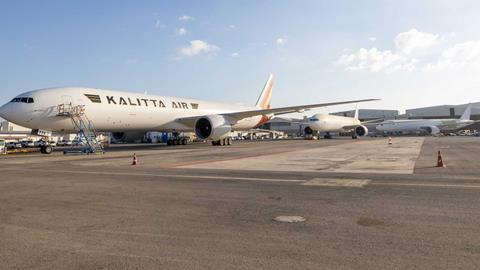
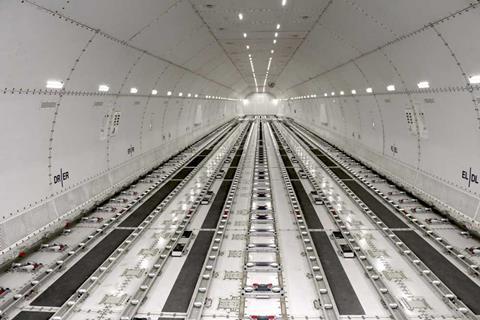
The B777-300ERSF, known in the industry as “The Big Twin”, is widely regarded as a game changer. It combines the payload and range capabilities of a dedicated widebody freighter with the economic benefits of a converted passenger jet. IAI has established a global infrastructure of conversion centers to support this program, ensuring rapid delivery and widespread service coverage. This strategic network is key to meeting the aviation industry’s increasing demand for widebody cargo capacity. The 777-300ERSF delivers a high-quality solution at roughly one-third of the cost of a new-build freighter, making it an exceptionally attractive option for operators looking to expand their fleets efficiently.
For the medium-sized segment, IAI’s A330-300BDSF conversion program extends the company’s dominance by addressing a critical market need—the shortage of B767-300 airframes available for conversion. The A330-300BDSF provides operators with a modern, fuel-efficient, and eco-friendly alternative that ensures the continued availability of mid-size freighter capacity well into the future.
Economic Impact Beyond Aviation
The benefits of IAI’s aircraft conversion programs extend far beyond the aviation sector. By offering cost-effective cargo solutions optimized for real-world operational needs, these programs help airlines and logistics companies maintain competitive transportation costs relative to the value of their goods. This cost balance is essential to preserving viable trade routes, especially for high-value and time-sensitive products such as electronics, pharmaceuticals, and perishable goods.
Without affordable conversion options, the rising cost of new-build aircraft could make certain trade lanes economically unfeasible, particularly for smaller operators. By providing efficient and flexible cargo capacity, IAI’s conversions ensure that the flow of goods continues smoothly even amid global supply-chain pressures.
Supporting Global Trade Efficiency
IAI’s sustained leadership in medium-size conversions underscores its critical role in the global logistics ecosystem. These aircraft not only link major economic centers but also support emerging markets by enabling reliable, cost-effective air transport. As trade networks grow increasingly complex, converted aircraft provide the flexibility to adapt capacity to shifting demand patterns, whether driven by seasonal fluctuations, geopolitical changes, or the rapid expansion of e-commerce.
Furthermore, by extending the operational life of existing passenger aircraft, IAI’s conversion programs contribute to sustainability goals. Repurposing aircraft reduces the need for new manufacturing and helps lower the aviation industry’s overall carbon footprint. For operators, this translates into both economic and environmental efficiency, a win-win scenario that aligns with the industry’s broader push toward greener logistics solutions.
Driving the Future of Global Commerce
As global trade continues to evolve, the importance of reliable, adaptable cargo capacity will only increase. The surge in online retail, the growing expectation for fast international deliveries, and the demand for resilient supply chains all point to the same conclusion: efficient air cargo is indispensable.
IAI’s aircraft conversion programs are positioned at the heart of this transformation. By combining advanced engineering with strategic foresight, the company ensures that airlines, cargo operators, and global logistics providers have the tools they need to meet tomorrow’s challenges. Ultimately, IAI’s work does more than convert aircraft - it helps sustain the flow of goods, opportunities, and economic growth across the world.
Through innovation, precision, and strategic vision, IAI continues to play a defining role in maintaining the strength and sustainability of global trade value.
For more information, contact IAI’s conversions global experts at Aviation_Group@iai.co.il