












The Pentagon has deployed ground attack jets and helicopters to interdict boats operating around the Strait of Hormuz.
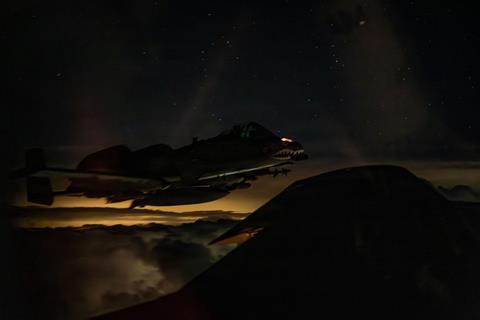
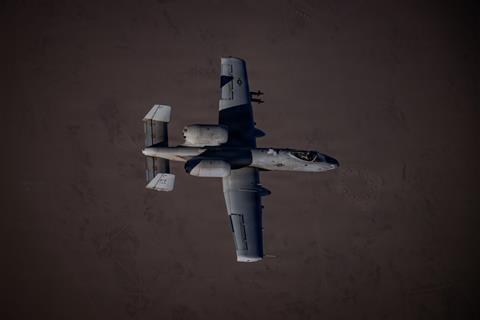
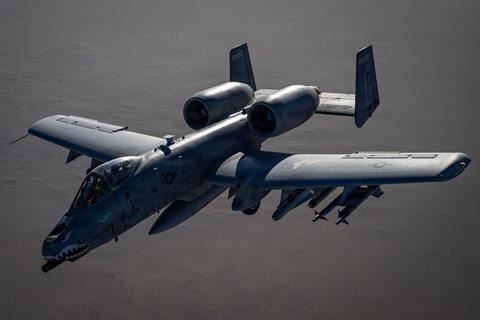
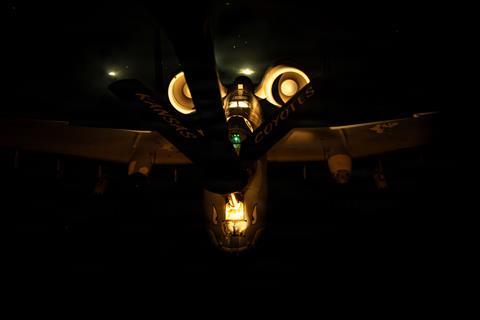
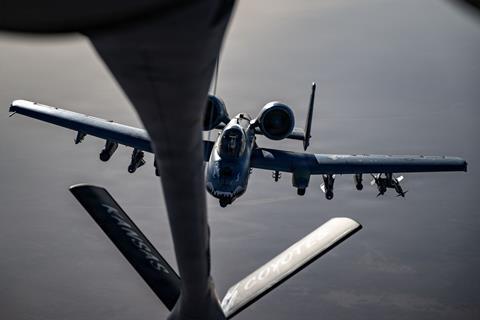
Chairman of the joint chiefs of staff, General Dan Caine, confirmed on 19 March that Fairchild Republic A-10 fighters and Boeing AH-64E attack helicopters are now operating over the strategic waterway off Iran’s southern coast.
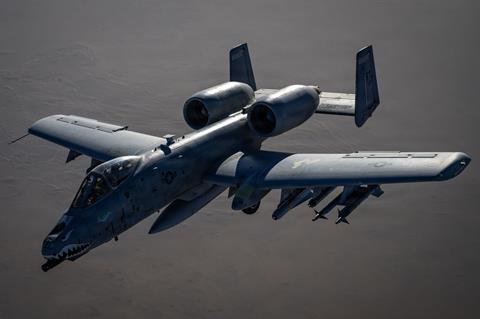
“The A-10 Warthog is now in the fight across the southern flank and is hunting and killing fast attack watercraft in the Straits of Hormuz,” says Caine.
The senior-most American military officer adds that Apache helicopters from both the US and regional allies are also patrolling the southern flank of the two-pronged US-Israeli air campaign against Iran.
In addition to targeting maritime vessels, Caine says AH-64s are being used to intercept on-way attack drones fired by Iran, which have struck airports, critical energy facilities and American bases in multiple countries throughout the Persian Gulf region.
Within the US military, only the US Army operates the Apache. A number of Gulf countries operate sizeable AH-64 fleets, including Qatar (24), Saudi Arabia (22), and the UAE (30).
Operating in their primary air-to-ground capacity, Caine says American AH-64s have also carried out strikes against Iranian aligned militia groups in Iraq.
“We remain focused on pursuit of any platform that Iran could field to harm Americans or our partners,” Caine says.
Last week, a US Air Force KC-135 tanker crashed in western Iraq, although the Pentagon says enemy activity was not a factor in the incident.
The return of the much-vaunted Warthog to frontline combat is the latest reincarnation for the venerable attack jet, which the air force has repeatedly tapped for frontline service in recent years, despite ongoing plans to divest the entire A-10 fleet.
The USAF continues to shrink its inventory of the Cold War-era attack jets, which were designed to kill Soviet tanks with infamous General Dynamics 30mm GAU-8A Avenger cannon.
Originally produced in 1972, the A-10 and its famous titanium ‘bathtub’ cockpit were designed to survive against direct fire air defence guns and anti-anti-aircraft artillery to engage targets from low-altitude.
Air force brass have for years sought to retire the A-10, which senior leaders have described as costly to maintain, unsurvivable against modern threats and generally ill-suited for modern combat.
The retirement plans were for years thwarted by lawmakers in the US Congress, propelled by testimony from ground combat troops who were received vital close air support from the A-10 during the wars in Iraq and Afghanistan.
Congress finally permitted the air force to begin gradually divesting A-10s in 2023. Further fleet reductions were approved in subsequent years, cutting the inventory from a high of 283 in 2023 to a current level of 145 jets.
Current and former A-10 pilots have repeatedly cautioned against retiring the A-10, noting that there is no other dedicated ground attack platform in the USAF inventory.
Retired USAF Colonel Kim Campbell, who rode into aviation history when she landed a badly damaged A-10 without any hydraulic power during the 2003 invasion of Iraq, has become an advocate for the versatility and ruggedness of the Warthog.
In a 2023 interview with FlightGlobal, she said that just because the A-10 was not designed to fight against so-called “near peer” air threats does not mean that its particular breed of stand-in close air support will never be needed again.
“If there are ground forces on the ground, and we move beyond the initial stages of the conflict, there is going to be a role for a ground support platform in some way,” she said.
Campbell predicted that once more survivable aircraft like the Lockheed Martin F-35 stealth fighter and Northrop Grumman B-2 stealth bomber have suppressed enemy air defences and achieved at least localised air superiority, the A-10 will be able to join the fight.
“If we are going to be effective then those are things that we need, but that doesn’t mean that that is not going to happen down the road in any stage of peer to near peer conflict,” Campbell said.
Her assessment has proven highly prophetic in the case of the Iran air war, which the Pentagon calls Operation Epic Fury.
The campaign began with long-range strikes with air- and sea-launched cruise and B-2 stealth bombers starting on 28 February. By 4 March, Caine declared that the US had achieved “localised air superiority across the southern flank of the Iranian coast”.
Some two weeks later, the A-10 has begun combat sorties, just as Campbell predicted.
Striking maritime targets is just the latest mission for the Warthog which in recent years has been deployed to strike targets in Syria, and escort ballistic missile submarines during coastal transit.
Whether this latest tour of combat duty will change the fate of the A-10 remains to be seen.
Air force budget documents for 2026 call for the entire remaining Warthog fleet to be phased out of service by 2027.
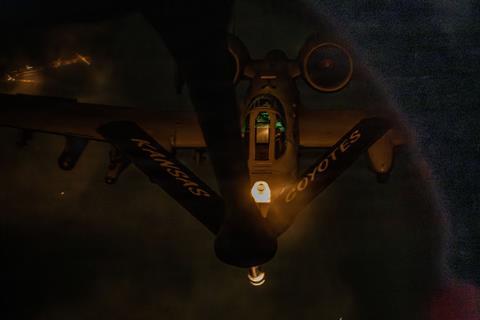
See more photos of the A-10’s latest combat deployment as part of Operation Epic Fury: