















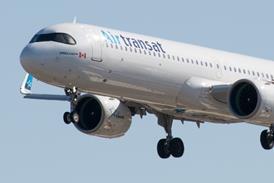
Boeing has failed to meet an Israeli air force deadline for responses to a request for information for a signals intelligence (SIGINT) aircraft. The US manufacturer had been expected to offer a version of the 737-800.
Gulfstream, with its GV business jet, did respond to the request. The competition is likely to be re-opened, allowing Boeing to submit a bid and to maintain competition, say Israeli air force sources. Israel Aircraft Industries subsidiary Elta will supply the SIGINT systems on the winning platform.
Boeing and Gulfstream were issued with an RFI last year for up to four SIGINT aircraft to replace elderly Boeing 707s.
Boeing failed to secure Washington's approval to offer the 737 for the SIGINT mission, even though the company received an extension to the deadline.
Meanwhile, the Israeli air force is limiting use of its Sikorsky CH-53 heavylift helicopters to special missions because of a spares shortage. For routine missions the air force will rely on its Sikorsky UH-60 Black Hawks.
According to Brig Gen "S", Tel-Nof airbase commander, there is a growing problem in acquiring spares for the machines which have been in Israeli service since 1969. Israel operates 39 CH-53-2000s, which were upgraded by Israel Aircraft Industries in the 1990s.
The base commander says spares are being sought in other countries that operate the type. Besides the US armed forces, the CH-53 is operated by Germany, Iran and Japan.
Brig Gen "S" says the air force will retain its upgraded McDonnell Douglas F-4 Phantoms until around 2010 as there is no alternative platform to carry some of the type's precision-guided munitions, including the Rafael Popeye air-to-ground missile and various classified weapons.
Some Phantoms at Tel-Nof are fitted with unique high altitude camera systems. A squadron commander at the base says some weapons will have to be removed from the inventory when the F-4s are retired.
Source: Flight International