

















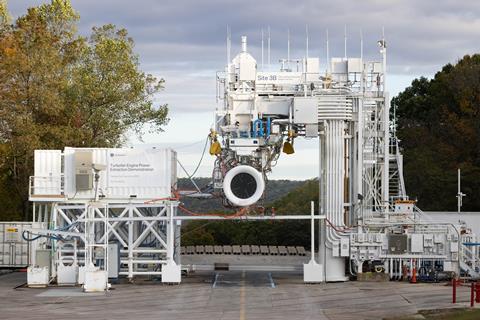
Through an initial phase of ground testing completed late last year, GE Aerospace demonstrated key capabilities of the turbine-based hybrid-electric propulsion system it is developing for possible deployment on the next generation of narrowbody passenger jets.
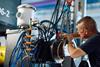
The trials – conducted by GE at its Peebles site in Ohio – demonstrated “power transfer, extraction and injection in a high-bypass commercial turbofan engine”, the company said on 26 January. “Technical teams advanced understanding of the hybrid-electric engine’s system integration and controls, beyond just standalone components.”
GE has said its hybrid-electric demonstrator is part of CFM International’s broader project – called RISE (Revolution Innovation for Sustainable Engines) – to develop an open-rotor engine for narrowbodies expected to come to market in the mid-to-late 2030s.
Safran Aircraft Engines and GE jointly own CFM.
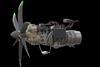
GE’s recently tested hybrid-electric demonstrator consists of a Passport turbofan (an engine that powers Bombardier business jets) fitted with “electric motor/generators”. The motor/generators can inject energy into the turbine – such as during take-off to provide extra thrust – and to extract energy from it.
“GE Aerospace is developing a narrowbody hybrid electric architecture that embeds electric motor/generators in a gas turbine engine to supplement power during different phases of operation. The design optimises performance and creates a system that can work with or without energy storage like batteries,” the company says.
The recent ground tests “exceeded NASA’s technical performance benchmarks”, GE adds.
The company is developing the hybrid-electric configuration through NASA’s Turbofan Engine Power Extraction and Demonstration project – itself part of NASA’s broader Hybrid Thermally Efficient Core (HyTec) effort.
The HyTec project’s goals include developing smaller engine cores that, by burning hotter and at higher temperatures, are 5-10% more efficient than today’s turbofan cores. The cores are to contain a degree of hybridisation; NASA requires that the system extract 10-15% of the cores’ power as electricity. That is four times more than what is possible with today’s engine architectures.
“Our latest milestone successfully demonstrated a narrowbody hybrid-electric engine architecture that doesn’t require energy storage to operate. It’s a critical step to making hybrid electric flight a reality for commercial aviation,” says GE vice-president for future of flight Arjan Hegeman. “Hybrid-electric propulsion is central to how GE Aerospace is redefining the future of flight.”
Competitors Pratt & Whitney and Honeywell also won NASA HyTEC development contracts.