











Air New Zealand is undertaking a “comprehensive review” of its business, as it plunged to its first loss in more than three years amid mounting challenges like rising costs and supply chain delays.
Airline chief Nikhil Ravishankar, who was appointed as the airline’s new leader in October, says the review covers “all aspects”, with the objective of “returning the airline to sustained profitability through enhanced operational performance, growth and further cost transformation initiatives”.
Air New Zealand chair Therese Walsh adds: “The strategy reset will allow us to be firmly focused on strengthening and growing our airline to deliver long term growth and prosperity for New Zealand.”
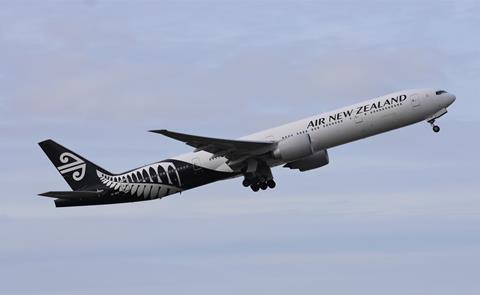
Air New Zealand swung to a pre-tax loss of NZ$59 million ($35.4 million) for the six months to 31 December 2025, compared to a profit of NZ$144 million in the year-ago period.
The figure is worse than its earlier earnings guidance, where it forecast a loss of between NZ$30-55 million.
The airline’s well-publicised supply chain challenges continue to impact its earnings. Air New Zealand is dealing with engine issues on its Pratt & Whitney PW1100G-powered Airbus narrowbodies, as well as on its Boeing 787s, which are powered by Rolls-Royce Trent 1000s.
The airline has up to eight aircraft grounded at times, due to delays in maintenance.
“While the airline received NZ$55 million in compensation from engine manufacturers for the first half, it estimates an additional NZ$90 million of earnings could have been included within the result had the fleet operated as intended,” the Star Alliance operator states.
It adds that it is in “ongoing negotiations” with the enginemakers to “improve certainty” around maintenance schedules and compensation. The airline expects to return to service four grounded aircraft through 2026, says Ravishankar.
On top of maintenance delays, Air New Zealand says it experienced a “slower than expected” recovery in domestic travel demand, which was partially offset by strong international inbound travel demand, especially for the premium travel segment.
The airline expects its earnings for the second half of fiscal 2026 to be “broadly in line with, or modestly below” that of the first-half.
“The outlook remains subject to material uncertainty, including engine return schedules, the timing and quantum of compensation, and continued volatility across key input costs and demand conditions,” it states.