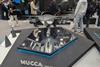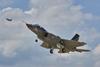
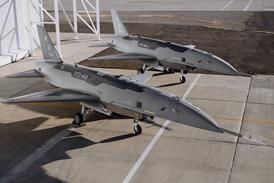












First flight of the Anduril YFQ-44A autonomous fighter prototype is close at hand, according to officials from both the company and the US Air Force.
Speaking at the annual Air & Spaces Forces Association (AFA) conference near Washington, DC on 22 September, the air force’s top officer said the maiden sortie of the YFQ-44A will be coming soon.
“One of them is flying and one of them is imminent,” said USAF chief of staff General David Allvin.
The four-star officer was referencing the two prototype designs vying to become the air force’s first FQ- designated uncrewed fighter jet.
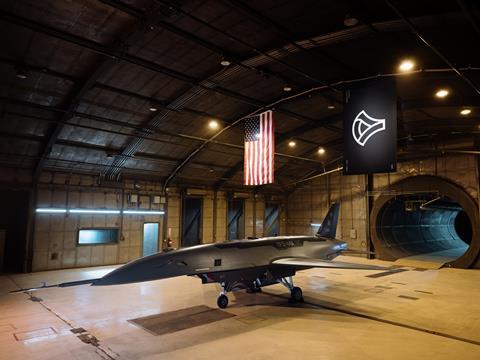
General Atomics Aeronautical Systems (GA-ASI) was the first to achieve lift, with the company’s YFQ-42A jet logging its maiden sortie at the end of August.
Both GA-ASI and Anduril had been targeting the end of summer for the start of flight testing on the Collaborative Combat Aircraft (CCA) prototypes.
Air force secretary Troy Meink separately revealed on 22 September that the Anduril aircraft is now expected to fly in the middle of October.
Speaking to FlightGlobal at the AFA event, Anduril executives said they are wrapping up ground testing on the YFQ-44A and are taking some extra time to further develop the autonomous flight software that will enable the uncrewed jet to make its first flight without any remote piloting inputs.
“We have multiple vehicles at our test facility in ground testing right now and we’re in the final stages before first flight,” says Diem Salmon, Anduril’s vice-president of air dominance and strike.
“We’re still well ahead of the programme schedule in terms of getting YFQ-44A into the air and feel really confident in our ability to do so,” she adds.
Anduril began ground testing the YFQ-44A in May, beating rival General Atomics to that milestone.
The California-based start-up has already successfully tested semi-autonomous taxiing, wherein a human overseer on the ground initiates operations with the push of a button and the YFQ-44A executes the action without further input.
Flight operations will be carried out in a similar manner, including unpiloted take-off and landing, guided by onboard autonomy software.
“Take-off and landing will be done via push of a button. There is no stick and throttle,” Salmon says.
“There’s just a little bit more on the software development side that needs to get rung out,” she adds. “So that is what’s currently driving our schedule right now.”
Although that additional software work has put Anduril slightly behind its main CCA rival, Salmon says the company is confident that taking extra time to mature the autonomous flight control software will ultimately allow Anduril to accelerate the remainder of the test campaign.
“We are kind of tackling that hard part first,” she notes.
Jason Levin, Anduril’s senior vice-president of engineering for air dominance and strike, concurs that software, rather than hardware, represents the crux of the CCA challenge.
“The jet itself should be the easy part,” he says. “The jet’s not the hard part.”
Although the company declines to provide specific details, Levin says the YFQ-44A flight test campaign will be a fairly “standard” build-up, including evaluating the aircraft’s low-speed handling traits, testing critical avionics and gradually expanding the flight envelope.
The USAF says it hopes to conclude flight trials and make a competitive procurement decision on the first increment of CCAs before the end of the 2026 fiscal year, which concludes in September 2026.
Anduril says it has multiple YFQ-44A aircraft undergoing assembly at an unspecified location.
The company declines to confirm whether or not production of the initial run of test YFQ-44A aircraft is taking place at its Costa Mesa headquarters in Southern California, which FlightGlobal toured in 2023.
However, Levin confirms that Anduril’s first large-scale production site, dubbed Arsenal-1, will be capable of producing base model Fury jets, the design from which the YFQ-44A is derived.
That facility is currently under construction at Rickenbacker International airport in Columbus, Ohio, with plans to deliver a range of Anduril products, including Fury, the Roadrunner drone interceptor and the Barracuda family of low-cost cruise missiles.