














Seventy years after the Lockheed Martin U-2 spyplane made its first flight, the distinctive high-altitude jet has set a new endurance record for the type.
A two-seat TU-2S trainer variant of the U-2 logged a more than 14h flight covering over 6,000nm (11,110km) while overflying the 48 contiguous states of the continental USA.
The US Air Force (USAF) confirmed the flight on 1 August, noting the long-distance sortie launched from the U-2 fleet’s home base at Beale AFB in California’s Sacramento Valley on 31 July.
The success of the long-endurance mission pushed the U-2S “beyond its known limits”, the air force says.
“The flight itself maxed out the operational range of the U-2 and placed the pilots at the edge of their physiological limit,” the service notes.
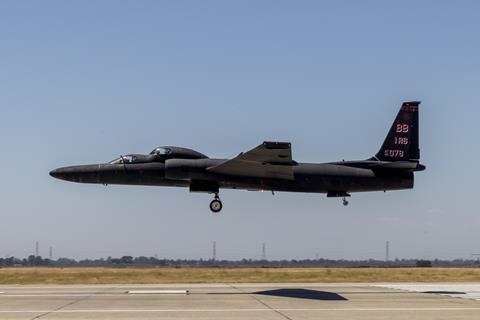
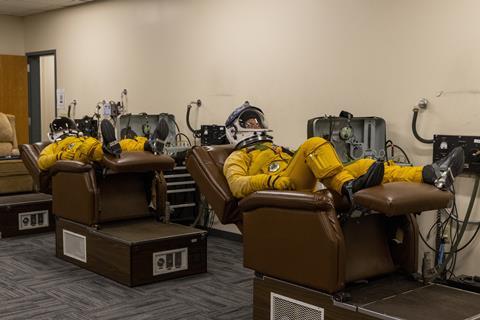
A specialised physiological support unit prepares U-2 aircraft and pilots for every mission, including maintaining the iconic full-body pressure suits worn by the aviators and assisting with launch and recovery of the jets, which use an unusual bicycle landing gear configuration.
The timing of the record-setting sortie was likely deliberate. The USAF is seeking to retire is fleet of 24 operational U-2S and three TU-2S jets by 2026, while advocates for the Cold War-era platform look for arguments to keep the type flying.
“The character of war is changing, but our extreme ownership of our mission to build aircrew ready to exploit and dominate the electromagnetic spectrum and win will never change,” says Lieutenant Colonel John Mattson, commander of the USAF’s 1st Reconnaissance Squadron, which trains new U-2 pilots.
In written testimony provided to the US Senate in May, air force chief of staff General David Allvin indicated the service does not view the high-altitude aircraft as suitable for the modern intelligence, surveillance and reconnaissance (ISR) mission.
“The ability to win high-end conflicts requires transitioning to connected, survivable platform investment and accepting short-term risks by divesting legacy ISR assets,” Allvin said. “The USAF plans to transition all U-2 capabilities to other reconnaissance aircraft post-divestment.”
It was not specified which platforms would be taking over the unique U-2S mission, although the Pentagon under the Trump Administration has shown an affinity for space-based alternatives for ISR over conventional airborne options.
In the past, congressional lawmakers have intervened to prevent or limit aircraft retirements, including of the U-2S.
There are already indications that Congress may intervene in such a manner for the U-2 fleet, though clarity will not be provided until the fiscal year 2026 defence budget is approved.