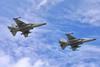













Taiwan’s air force is urging the USA to fast-track the installation of automatic ground collision avoidance systems (Auto-GCAS) across its Lockheed Martin F-16V fleet following the disappearance of an aircraft during a night mission on 6 January.
Search and rescue operations continue for the lost pilot, captain Hsin Po-yi, two days after the loss of the aircraft off the country’s east coast, according to Taiwan’s official Central News Agency.
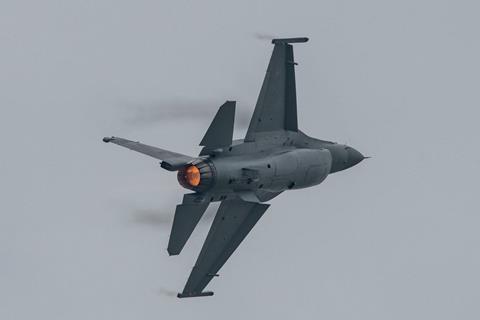
Before the crash Hsin reported a malfunction with the jet’s Modular Mission Computer (MMC). The issue prevented him from seeing his flight path or determining the jet’s altitude.
Hsin transmitted that he was ejecting, but it is not clear if he succeeded.
The MMC was a key element in an upgrade programme for 139 Taiwanese F-16s that was completed in 2023. In Taiwan’s older F-16 Block 20s, a single MMC unit replaced three separate systems: the fire control computer, head-up display electronics unit, and stores management system.
This allowed for the installation of the Northrop Grumman AN/APG-83 active electronically scanned array radar, an upgraded cockpit, improved networking capabilities, and enhanced weapons carriage.
The F-16V upgrade programme, however, did not include Auto-GCAS owing to the complexity of installing this system on older F-16s. Given the older jets’ analogue flight controls, integrating Auto-GCAS involves significant wiring and structural work as well as the installation of a special Hybrid Flight Control Computer.
In 2021, the US government awarded Lockheed a $138 million contract for Taiwan’s F-16 fleet that included Auto-GCAS and other capabilities.
This work, however, was delayed and reports from Taiwan suggest that Auto-GCAS will not be installed across Taiwan’s legacy F-16 fleet until 2028.
The 66 F-16 Block 70s that Taiwan has on order will come with Auto-GCAS pre-installed.