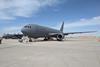














The US Air Force (USAF) is exploring all options for a future tanker aircraft that is better able to survive in a contested environment.
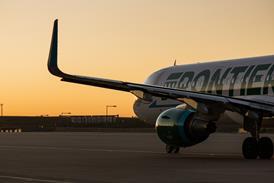
These could include a clean-sheet, stealth blended-wing body design, a converted business jet or a “signature-managed” conventional tanker.
“Just about every option is on the table,” says General John Lamontagne, head of the USAF’s Air Mobility Command.
Speaking at the annual Air & Space Forces Association (AFA) conference outside Washington, DC on 22 September, the commander of the USAF’s tanker force said the service is still moving forward with the Next Generation Air refuelling System (NGAS) development effort, which had until recently appeared stalled.
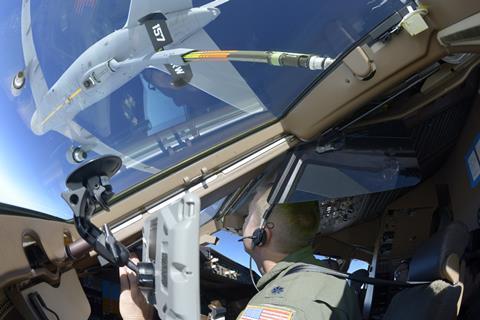
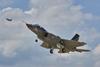
Launched in 2023, the NGAS project originally envisioned a new purpose-built tanker with low-observability features. It was to act as a stand-in tanker for stealth jets like the Lockheed Martin F-35 strike fighter and Northrop Grumman’s future B-21 bomber.
The air force hoped to field the new tanker sometime in the 2030s.
However, earlier this year the USAF general overseeing force design and integration suggested the service could perhaps develop a more-cost-effective tanker using electronic warfare countermeasures for protection.
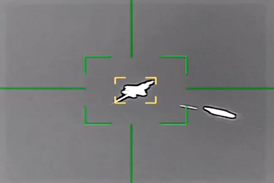
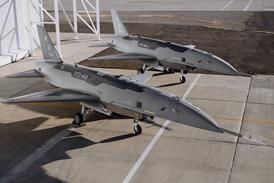
This could perhaps be combined with advanced air-superiority capabilities like in-development uncrewed fighters, or a future sixth-generation aircraft, said Major General Joseph Kunkel in March.
In August, the USAF released a non-binding request for information (RFI) to industry seeking ideas for NGAS concepts, with responses due by 24 October.
Lamontagne’s recent comments indicate the stealth tanker design is again being considered, with the air force seeking additional cost information before making a decision.
“That is really to help us better understand some cost estimates,” Lamontagne says of the latest RFI. “When we did the first analysis of alternatives on NGAS last winter, I would say those cost estimates were really rough on what a signature-managed platform might look like.”
The four-star general says the “signature-managed” concept could cover a wide range of options, including an aircraft the size of a Boeing KC-135 with the “exquisite stealth” attributes of an F-35.
“This is really, at its simplest, an attempt to refine those costs [and] go back out to industry and figure out what’s in the realm of the possible,” Lamontagne adds.
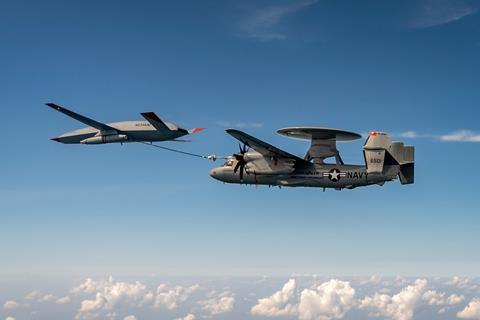
Another option is incorporating an uncrewed refuelling aircraft into the tanker fleet. The US Navy is developing the Boeing MQ-25 to support its carrier air wings with an autonomous aerial refuelling capability. Boeing expects to begin flight testing that aircraft this year, with carrier integration starting in 2026.
Lamontagne says the air force does not have firm plans for an uncrewed tanker but is open to the possibility.
“We haven’t looked at specific airframes,” he says. “I think we will go where the technology takes us. It’s already happening with the navy and MQ-25.”
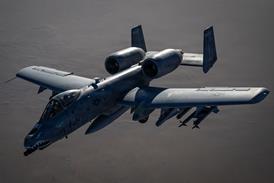
The air force is certain that its current fleet of commercial-derivative tankers will not be adequate for a high-end fight against a well-equipped modern adversary.
“Our current tanker force is not going to serve us well in a high-threat environment,” Lamontagne says.
He notes the USAF’s successful long-range penetration strike against Iranian nuclear facilities in June was a “relatively safe environment” for the Northrop B-2 stealth bombers, escort fighters and supporting tankers that carried out the mission.
It is widely believed Israeli air force F-35Is had significantly degraded Iran’s air defence capabilities throughout the months of intermittent conflict between the two countries that preceded the US air strikes.
“That’s not what we’re going to be expected to do in the future,” Lamontagne says. “We’ve got to be able to go into much-higher threat environments.”
Absent a survivable stand-in tanking option, the AMC commander says the air force will need to develop new extreme long-range precision weapons that can allow bombers and tankers to remain far outside an adversary’s engagement zones.
Neither will simply evacuating conventional tankers when an enemy threat appears be tactically sound.
“It can’t just be a runaway strategy,” Lamontagne notes. “Because if it’s just a runaway strategy, we won’t be effective.”
Despite the air force’s rhetorical commitment to NGAS, the programme’s future remains nebulous.
The USAF’s fiscal year 2026 budget request included just under $13 million to support NGAS development, up from $7 million in FY2025.
The request comes at a time of immense competition for fiscal resources within the air force. Major procurement efforts including the Boeing F-47 sixth-generation fighter, B-21 stealth bomber and Sentinel intercontinental ballistic missile recapitalisation all demand substantial investment.