











The US Air Force (USAF) plans to integrate a new augmented reality technology into some of its operational Lockheed Martin F-16 fighters.
Developed by Florida-based start-up Red 6, the helmet-mounted system can project images onto a pilot’s visor to simulate the presence of other aircraft or environmental conditions.
The company has positioned its Airborne Tactical Augmented Reality System (ATARS) as a means of creating more realistic and effective air combat training, combining the best elements of simulators with physical cockpit flying in real time.
On 15 August, Red 6 said it has received a contract from the USAF’s Air Combat Command to deploy the ATARS technology into the F-16 fleet.
“This is more than a contract – it’s a validation of our vision and a signal that the future of air combat training has arrived,” says Daniel Robinson, Red 6 chief executive and a former Lockheed F-22 pilot.
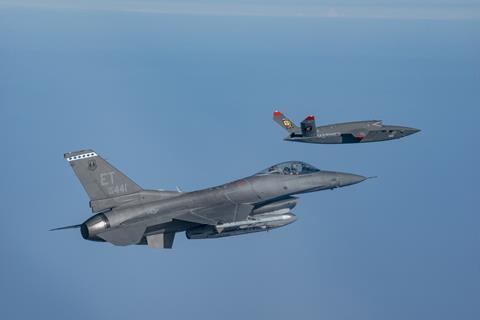
Robinson co-founded Red 6 in 2018, and the company has spent the past seven years developing its augmented reality technology, which until recently seemed to be something more aligned with science fiction than reality.
The company’s chief strategy officer told FlightGlobal in June that recent industrial advancements in the production of components such as hyper-wide field-of-view lenses and curved screens allowed Red 6 to shift most of its internal focus to software and move forward with ATARS.
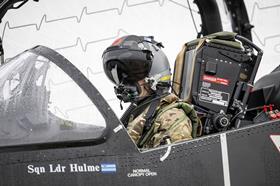
Red 6 has scored several wins throughout that development process, including installing the ATARS in several of the USAF’s Northrop T-38C trainers and demonstrating the system in the UK Royal Air Force’s BAE Systems Hawk trainers.
The company has received investment funding from Lockheed and also has a partnership with Boeing to deploy ATARS on the T-7A Red Hawk, Boeing’s single-engined light jet that will be the USAF’s new trainer aircraft.
The ATARS system is also integrated with the USAF’s Lockheed MC-130J special operations transport aircraft.
In July, Red 6 was also announced as partner for Northrop Grumman’s Beacon project, which aims to test and mature novel technologies surrounding autonomous aviation.
The latest contract with Air Combat Command, which oversees the air force’s active duty fighter squadrons and frontline operations globally, marks the first instance of the Red 6 augmented reality technology being fielded to operational fighter units.
The USAF has roughly 700 F-16Cs in frontline service, alongside another 130 or so two-seat F-16Ds for advanced flight training.
Red 6 did not disclose how many aircraft are covered under the 15 August contract.
However, Robinson describes the F-16 as “just the beginning” for the company’s augmented reality technology.
“ATARS is the only system capable of replicating the cognitive complexity fighter pilots face in real-world engagements,” he says.
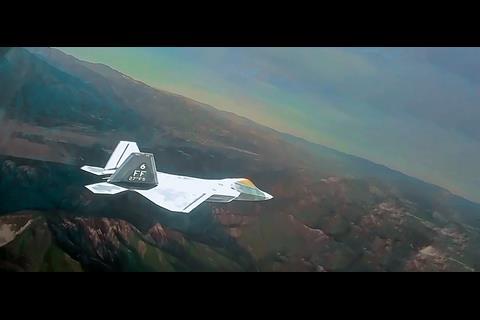
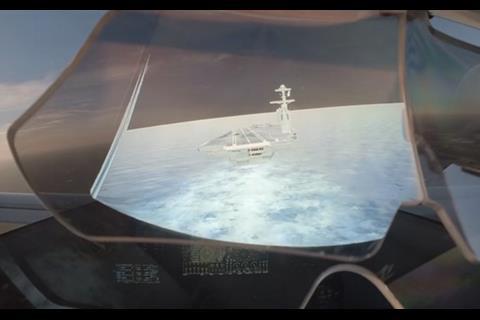
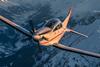
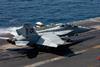
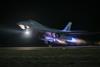
Imagery provided to FlightGlobal by Red 6 shows a number of different projections, including an F-22 stealth fighter flying in wing man position and the view of an aircraft carrier as a pilot would see on landing approach.
The ATARS visor can also simulate environmental conditions like rotorwash brownout for helicopter pilots or working with the unmanned collaborative combat aircraft currently being developed by the USAF.
See images of Red 6’s augmented reality projections: