












Spirit Airlines has filed a plan of reorganisation in US bankruptcy court, detailing a vision for post-Chapter 11 operations that includes dramatically reduced fleet numbers and a more-flexible business model.
The Florida-based ultra-low-cost carrier (ULCC) says it will emerge from bankruptcy with a plan to “reinforce its position as America’s leading value carrier”, with a new financial framework that will allow Spirit to move forward as a standalone operation.
Spirit filed a restructuring support agreement and plan of reorganisation with the US Bankruptcy Court for the Southern District of New York on 13 March, adding that it is benefiting from “continued support” from debtors in possession and secured noteholders.
“While we still have work to do with other important stakeholders, today’s agreements and filings are very material steps forward toward emergence,” says Dave Davis, Spirit’s chief executive.
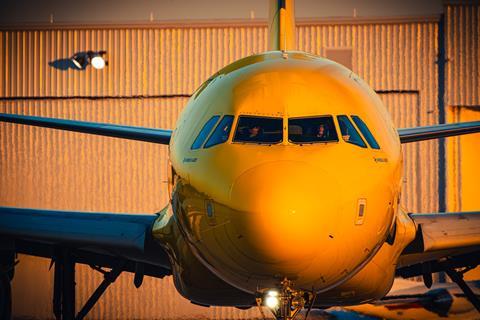
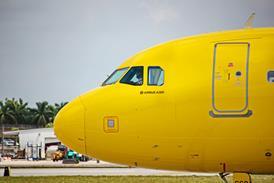
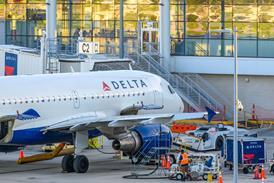
Spirit’s strategy has included a massive culling of its fleet of Airbus A320-family aircraft. After once operating more than 230 large narrowbody jets, Spirit currently has 113 aircraft listed as “in service” by aviation analytics firm Cirium.
The ULCC will shed further metal in coming weeks, as it disclosed intention to operate 76-80 aircraft by the third quarter.
Spirit will operate primarily older A320s and A321s as it moves away from latest-generation A320neo-family jets – a bid to rid itself of unproductive aircraft grounded by Pratt & Whitney’s ongoing recall of geared turbofan engines.
Notably, the airline leaves the door open to add aircraft toward decade-end. It previously disclosed a deal with lessor AerCap to lease up to 30 A320-family jets in the future
”In addition to previously announced fleet adjustments, the planned adjustment will further reduce Spirit’s debt, lease obligations and aircraft costs,” it says. “The company anticipates adding aircraft between 2027 and 2030, commensurate with profitable growth opportunities.”
Meanwhile, Spirit is still overhauling its network to better align with consumer demand. It is focusing on its “strongest routes and markets”, including Fort Lauderdale, Orlando, Detroit and the New York City area via Newark Liberty International airport.
Perhaps most strikingly, Spirit is moving to adopt a flexible-scheduling model similar to that of Las Vegas-based leisure carrier Allegiant Air.
”The airline will increase aircraft utilisation on peak days, reduce off-peak flying and maintain flexibility to adjust to seasonal demand across markets,” Spirit says.
Like other US discounters, Spirit is also making an upmarket push with more premium-oriented products, with an ongoing roll-out of premium economy seating.
Finally, the airline expects to emerge from the Chapter 11 process with a far leaner balance sheet.
”Spirit’s debt and lease obligations are expected to be reduced from $7.4 billion pre-filing to approximately $2 billion post-emergence,” Spirit says. “The company will continue to pursue efficiencies and reduce costs across the business.”
Earlier this week, Spirit issued recall notices to hundreds of pilots who were involuntarily furloughed between 1 September 2024 and 1 November 2025, a period in which the ULCC struggled acutely with shifting market dynamics.