














Numerous events in the last year make clear the US Congress should again consider privatising US air traffic control (ATC).
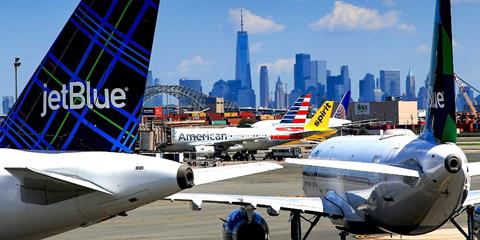
In January, a fatal midair collision near Ronald Reagan Washington National airport killed 67 people, the deadliest US aviation disaster since 2001. Months later, communication and surveillance system outages created serious risks to flights at Newark Liberty International airport and in airspace controlled by the Federal Aviation Administration’s Denver Air Route Traffic Control Center. Most recently, the US government shutdown caused substantial flight delays and cancellations, inconveniencing the traveling public and creating significant costs for the nation’s air carriers.
The FAA has implemented measures to resolve these issues. In response to the National Transportation Safety Board’s investigation of the accident near Reagan National, the FAA modified adjacent helicopter routes and implemented changes to facility staffing requirements. The FAA, backed by the administration of President Donald Trump, has also proposed its “Brand New Air Traffic Control System” initiative to upgrade safety critical infrastructure. And the end of the government shutdown alleviated flight delays and cancellations, at least for now.
But recent accidents, incidents and disruptions are indicative of organisational issues that prevent the ATC system from operating as safely and efficiently as possible. Any strategy to reform US ATC should include changes to the FAA’s Air Traffic Organization, the country’s designated ATC service provider.
During his first administration, President Trump announced a plan intended to improve ATC by privatising the system. But legislation proposing to create an independent service provider failed to reach a floor vote in the House of Representatives. The Biden administration did not pursue ATC reform, and privatisation is not part of the second Trump administration’s aviation agenda. Nonetheless, growing demand for capacity from airlines — and new entrants developing Advanced Air Mobility technologies — make reconsideration of privatisation critical.
The primary benefit is safety. The FAA’s dual role as regulator and ATC provider undermines its ability to oversee its own operations. Unlike the nation’s airlines, airports and other aviation entities, the FAA does not certify the Air Traffic Organization; its operations are conducted according to internal policies rather than a comprehensive regulatory framework. But an independent air traffic provider would be subject to regulatory requirements and oversight processes that have proven to enhance operational safety in other aviation sectors.
Privatisation would also better enable upgrades to the nation’s ATC infrastructure, including to communications and radar systems that failed at Newark earlier this year. A US Government Accountability Office study published in September 2024 found that more than one-third of the FAA’s ATC systems were “unsustainable”. There are physical infrastructure challenges also, as every US Air Route Traffic Control Center is more than 50 years old, making them older than their expected lives. Though the FAA’s Brand New Air Traffic Control System initiative involves comprehensive upgrades to multiple ATC systems and facilities, the initiative is not fully funded, and past upgrade programmes have failed to deliver expected results.
Privatisation would also insulate the US air transportation system from upheaval caused by future government shutdowns, during which controllers and technicians responsible for maintaining ATC infrastructure are required to work without pay. During the recent shutdown, staffing shortages stressed the ATC system, which normally manages approximately 45,000 flights daily. The FAA also furloughed personnel responsible for system oversight and ATC support functions. Resulting delays and cancellations were prominent in the news and cited as arguments to end the shutdown. But an independent ATC service provider could operate unaffected from shutdowns, meaning less impact on the country’s aviation system.
Finally, privatisation would enhance the stability of the ATC provider’s leadership team by removing political influences that result in significant turnover among FAA staff. Since 2018, no FAA administrators have completed their five-year terms. The FAA has been led by seven people in as many years: three Senate-confirmed administrators and four acting administrators.

Other countries have realised capacity and safety benefits by privatising ATC. Canada’s air traffic service provider Nav Canada is a private not-for-profit organisation, and the UK’s NATS is a public-private partnership. Some nations have created independent government-owned ATC entities separate from their aviation regulators.
US industry and government stakeholders must acknowledge the current system’s inherent risks and agree that an organisational overhaul is needed. Then, leaders must build consensus on how a future ATC provider is funded, managed and regulated. Successful implementation will require continuity in FAA leadership, which has proved elusive.
The biggest risk may be maintaining the status quo and assuming the current Air Traffic Organization will be capable of safely supporting the future needs of the US air transportation system.
John Illson is an aviation safety consultant who has held senior positions at the FAA, Airlines for America, Joby Aviation and the International Civil Aviation Organization. He also worked 26 years as an airline captain.