














Up to three engine makers could share €60 million ($70.3 million) in EU funding to build ground demonstrators of hybrid-electric narrowbody powerplants under Clean Aviation’s next round of projects.

Detailed in a preliminary version of Clean Aviation’s fourth call for proposals – due to be issued in February next year – the plans for hybrid-electric demonstrators are part of a wider programme of research projects that encompass regional aircraft, hydrogen powertrains and other initiatives for a next-generation narrowbody.

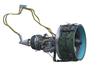
SWITCH Hybrid-Electric GTF

Source: Pratt & Whitney

MTU-led consortium has been developing a hybridised version of the PW1100G engine through the current SWITCH project

In total, Clean Aviation will provide €329.5 million in funding, which, when combined with contributions from the private sector, will result in a total €824 million research effort.

Clean Aviation will split its contribution between five streams:

  • Ultra-efficient Short-Medium Range (SMR, or narrowbody-sized) aircraft architectures: €130 million/5 projects
  • Hydrogen power: €101 million/4 projects
  • Ultra-efficient regional aircraft architectures: €40 million/1 project
  • Fast-track Areas (FTAs) – smaller ’agile’ projects looking at disruptive technologies: €40 million/7 projects
  • ‘Transverse’ activities such as those relating to the development of certification standards: €18.5 million/4 projects.

Outlining the scope of the hydridisation effort, Clean Aviation says the projects are expected to “demonstrate a hybrid-electric propulsion sub-system integrated into an [SMR] engine” for service entry in around 2035. Up to three projects will be chosen, it states.

Contractors can use “either ducted or unducted engines”, the Clean Aviation document states, and should demonstrate a “hybrid-electric sub-system” at technology readiness level (TRL) 5 by the end of the project.

This should include the “functional demonstration of power-extraction, injection and transient-assist modes in relevant operational conditions.”

As it is agnostic on the engine architecture, Clean Aviation has opened the door to potentially funding Safran – the RISE open-rotor powerplant being developed by its CFM International joint venture features hydrid-electric elements – alongside projects involving Rolls-Royce and MTU Aero Engines.

In the latter case, this would likely be a follow-on of its ongoing SWITCH project, which involves the hybridisation of a Pratt & Whitney PW1100G engine. Technologies for all phase 2 activities must be at TRL4 at the start of any phase 2 projects.

Clean Aviation says the hybrid-electric architecture must demonstrate a fuel-burn/CO2 saving of “at least 5%” at aircraft level and address thermal and energy management and control-system topics.

Within the SMR stream, Clean Aviation also plans to allocate €40 million for the development and demonstration of “a lightweight and aerodynamic ultra-efficient” rear fuselage and empennage, contributing to a 2% aircraft level CO2 reduction. The project should also validate an advanced manufacturing system capable of supporting high-rate production, the Clean Aviation document says.

In the regional space, meanwhile, Clean Aviation intends to award €40 million to a project targeting the development and demonstration of “an advanced airframe, including the wing, fuselage, empennage, and key enabling systems” for its hybrid-electric Ultra-Efficient Regional Aircraft (UERA) concept.

Airframe technologies are expected to contribute 10% of the overall 30% CO2 emissions reduction targeted for the UERA.

Three projects supporting the UERA development, including for hybrid-electric engines, were selected for funding in the programme’s previous call – the third overall and the first in its second phase.

The battery-based UERA was proposed as the “baseline concept” for the phase 2 activities following studies in the earlier phase.

Flight tests of a demonstrator aircraft are expected through the ATR-led DEMETRA project selected in call 3, with the configuration of that ATR 72-based aircraft to be frozen “by the end of 2026” to “support the start of flight tests by end of 2029”, Clean Aviation’s draft work programme for 2026-2027 discloses.

Hydrogen-related projects also make a return in the fourth call following their absence in call 3 due to maturity considerations.

Clean Aviation plans to fund four projects targeting the development and demonstration of:

  • the critical components and sub-system of a 2.5MW hydrogen fuel cell engine (€40 million)
  • a hydrogen fuel system, including the tank and fuel distribution and conditioning elements, for a fuel cell powertrain (€18 million)
  • a direct-combustion hydrogen propulsion system – including a full-scale low-NOx combustor at TRL5 and engine architecture at TRL4 (€15 million)
  • a hydrogen distribution system for a direct-combustion powertrain (€18 million).

While ground demonstrations in the first project are anticpated, Clean Aviation does not rule out flight tests of a sub-scale system if appropriate, although notes such activity “is not mandatory”.

Noting the wider delays to the development of hydrogen production and infrastructure that have slowed service entry for hydrogen-powered aircraft, Clean Aviation says it has revised the scope of its efforts at programme level “in order to focus on improving the critical components and sub-system performance”.

These, it says, are “needed to demonstrate the viability of the hydrogen-powered aircraft concepts.”

The final funding value and the list of topics for call 4 will be confirmed by Clean Aviation’s governing board on 12 February 2026. The projects chosen for funding will be revealed in the autumn.