







Feedstock. It is perhaps the biggest challenge facing the many start-ups and established energy companies moving into sustainable aviation fuel (SAF) in response to government mandates to scale up its use – in the European Union, the UK, and elsewhere.
The main traditional sources – used cooking oils and fats, known as hydro processed esters and fatty acids (HEFAs) – are in short supply as demand for green fuel grows. At the same time, HEFAs are being phased out as part of the SAF requirements, with London starting to limit their use from next year, and Brussels from 2030.
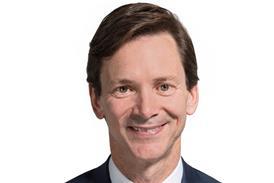
While some producers are looking at non-HEFA solutions from wood shavings to household waste, James Hygate wants to exploit another plentiful resource – so abundant, in fact, that societies struggle to dispose of it.
The UK-based firm he founded, Firefly, intends to power aircraft with fuel derived from solid human effluent, sourcing the feedstock directly from the water companies who need to get rid of it.
Hygate is a veteran of an infant industry. Trained as a zoologist in the 1990s, he switched scientific discliplines from biology to chemistry in the early 2000s when he set up a laboratory and production line in his parents’ garage to make biodiesel from used cooking oil.
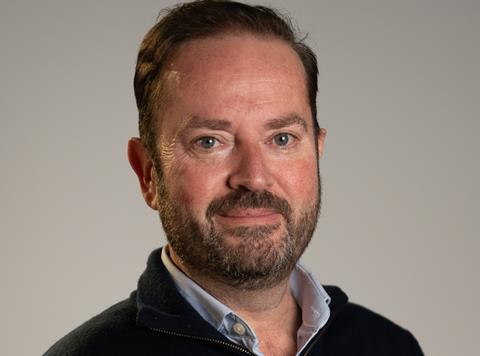
This was a time when the road haulage and public transport sectors were dabbling with biodiesel blends, and Hygate’s business, Green Fuels (GFL), had some success in this market.
However, he became convinced that aviation was the bigger prize. In 2008, the first test flight using a blend of SAF took place and in 2011 global standards body ASTM International approved the use of up to 50% blended biofuels in aviation. The slow shift towards SAF had started.
Hygate set up Firefly as a separate company in 2013 and began to investigate how to make aviation fuel from various biomasses that would meet the regulators’ approval. At first, he drew a blank.
“We tried every approved route out there, but nothing had the scale or the impact that we wanted,” he says. “Then we discovered biosolids. They are abundant and inexpensive, and they are all over the world.” What is more, they contain no fossil carbon.
However, they still need to be converted into refinery-ready material. Biosolids, despite their name, are 80% water and that requires a proprietary process – called hydrothermal liquefaction – that heats the sewage sludge to a high enough temperature to break it down into solid biocrude and wastewater.
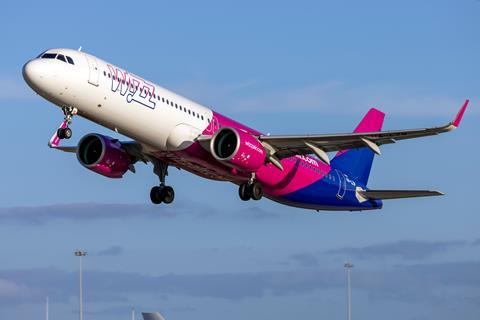
Firefly had its early supporters. In early 2024 the business announced a long-term deal with low-cost carrier Wizz Air, which, as part of its goal to power 10% of its flights by 2030, invested £5 million ($6.7 million) in the start-up and committed to buy 525,000 tonnes of its product over 15 years.
That helped give Firefly confidence to scale up towards industrialization and open doors to new funding. “Wizz got it straight away,” says Hygate. “Their contract involves an offtake agreement that works for a bank that’s going to lend us money.”
Other financial support has included a £2 million government research grant and a capital injection – amount undisclosed – from Builders Vision, a team of investors and philanthropists with the goal of supporting a range of sustainable projects.
On the supply side, Firefly in November 2024 announced a memorandum of understanding with Brazilian water and sanitation company Sanepar, which fits with Hygate’s strategy of extending the business beyond the UK by establishing a global network of processing facilities.
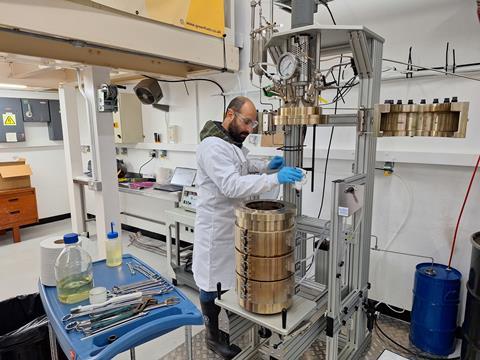
That gameplan will see Firefly in the next few years expanding from its current small laboratory in Gloucestershire by building a pilot facility at a refinery run by Haltermann Carless. That will be followed by a commercial-scale plant at the same location to produce the fuel.
However, before that stage, the raw material must be extracted and to do that, Firefly will set up a series of processing units – each the size of four shipping containers – at sewage treatment works, initially in the UK, but eventually around the world.
Hygate calls it a “hub and spoke” model, with the refinery at the centre being supplied with processed raw material from a circle of micro-operations near where human waste is being disposed of.
Hygate says the company has agreements in place with water companies and other suppliers to provide enough raw material to keep its first refinery busy for a year – the equivalent of 100,000 tonnes of crude.
While Firefly is still looking to secure the next stage of finance, Hygate is confident that the company can be producing commercially by 2029. “By that stage, we think we can have a facility built as well as our hub and spoke network. We are on track for that,” he says.
However, like any would-be start-up disruptor, he is realistic about the scale of the ambition. “It will take hundreds of millions [of pounds] to build this,” he says. “We are in the funding round currently for tens of millions. That won’t get us all the way, but it will get us to the stage of unlocking further funding.”
Hygate, whose contributions to low carbon fuels in the UK were recognised in 2024 with an Officer of the Order of the British Empire (OBE) medal from King Charles, says the company has “end to end” intellectual property in its processes, secured by patents.
He is determined to play a key role in the decarbonisation of aviation and not go the way of so many inspired British innovators in the past. “As a country, we’ve always been great at inventing stuff,” he says. “It’s getting to that next stage that’s the difficult bit, but we are determined to do it.”