












Safran has confirmed an order from Norway for hundreds of its AASM Hammer guided bombs for onward delivery to Ukraine.
Oslo earlier this week said it was collaborating with the French government on a package of military aid for Kyiv that included “a large volume of air-to-ground weapons” but did not specify the munitions to be supplied.
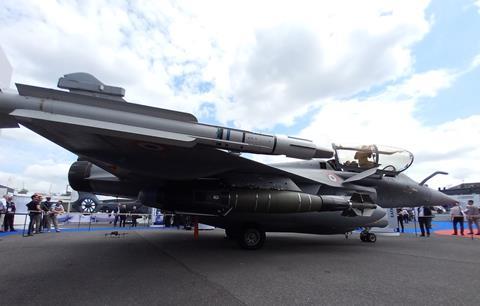
But Safran chief executive Olivier Andries confirms the procurement centres on the company’s Hammer glide bomb.
“We have seen that yesterday Norway has decided to order hundreds of them that they want to deliver to Ukraine,” he told financial analysts on a full-year earnings call.
High demand for the 38nm (70km)-range weapon has driven Safran to increase production four-fold over the last three years “and I believe we will continue to scale up”, says Andries.
Hammer was one of the standout performers in Safran’s defence business unit in 2025, with Andries also highlighting sales of its inertial navigation systems and missile propulsion solutions last year.
In the latter case Safran occupies a unique position as a designer and producer of turbojet missile motors in Europe, equipping both its own weapons, the MBDA Storm Shadow/SCALP-EG cruise missile, and those built by other companies including Saab and Kongsberg.
“Here the demand has grown massively,” he says. Safran in 2023 announced a €100 million ($118 million) factory investment to deliver a five-fold increase in production capacity for the motors, he notes.
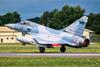
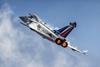
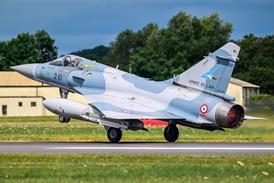
But spiking defence spending will also boost other Safran business units. Although deliveries of M88 engines for the Dassault Aviation Rafale fighter fell year on year to 34 units from 40 a year earlier, production accelerated in 2025 to “keep up with a strong backlog, especially for export customers”, says chief financial officer Pascal Bantegnie.
That backlog looks likely to further extend following the announcement on 12 February that India had selected the Rafale for a follow-on 114-unit order.